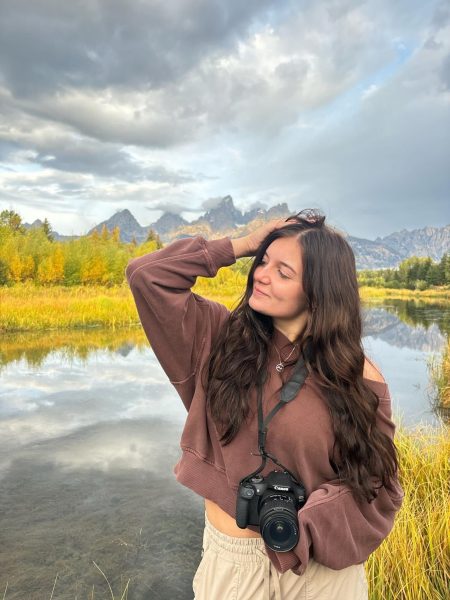

If you’re a national park enthusiast, then the Grand Tetons are probably high on your list for a visit. The tall granite peaks suddenly rising from the open fields make for an astonishing first impression. Lakes and winding rivers along the base of the Tetons, the variety of wildlife you won’t miss out on, and fields of wildflowers—endless opportunities for exploration. One might yearn for an escape to the popular National Park; a quick trip may be easier to pull off than one might think.
Grand Teton National Park is smaller than most, yet it offers a wide range of activities. This past fall, I visited the Tetons over a weekend in Sept. between classes. I only spent a little over 24 hours in the park, but I was able to make the trip worth it. Of course, in one day I wasn’t able to summit peaks and explore deep into the park, but I was able to scratch the surface and satisfy my need for an escape outdoors. My 24 hours in the park wasn’t just a quick checklist but more of an introduction to the Tetons’ vast landscapes and wildlife. So, if you’re looking for a quick weekend getaway from work or school life, here’s what I recommend.
 Camping/Lodging.
Grand Teton National Park is located just outside of Jackson Hole, Wyoming. If you’re not one for camping, Jackson Hole offers lodging. Campsites and other lodging options can be found within and surrounding the national park. Campgrounds within the park require a reservation. Reservations can be made at recreation.gov. My friend and I stayed at Headwaters Campground between Yellowstone National Park and the Tetons (I highly recommend it if you want to squeeze in a Yellowstone trip as well). The best time to visit the park is mid-May to late September. The park’s weather is typically on the cooler side, depending on the time of year. On winter days, temperatures are usually 20 degrees, and nights can be below freezing. In warmer months, daytime temperatures can reach the 70s.
Sunrise
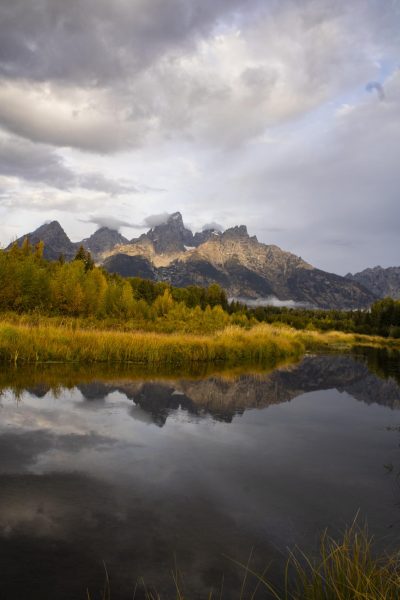
If you only have a short time to visit the park, you’ve got to do it right. Sunrise in the Tetons isn’t something you’re going to want to miss. When the sun first rises, the Tetons glow, and their reflection is visible on the rivers and lakes. The best place to spend the sunrise is Schwabacher Landing. Here you can catch the stunning iconic reflection on the still, calm water.
Hiking
If you’re looking to do a short hike or two in the Tetons area, Jenny Lake is a good place to start. Jenny Lake is the park’s most popular destination, according to the Grand Teton National Park Foundation.
An easy hike is the Jenny Lake Loop, about 7 miles with little elevation gain. The hike provides different views and angles of the lake. Along this trail is also the Hidden Falls Trail, the Tetons’ most popular hike, with a reward of the stunning 100-foot falls at the end. There are two ways to reach the falls. The first option is hiking along Jenny Lake on the southern side until turning towards the falls, which is about 5 miles. If you’re looking for a faster route, a boat shuttle is available near Jenny Lake Ranger Station. This boat costs about 15-20 dollars, but it will take you to the base of Mount Teewinot. From here, the hike to the falls is only about half a mile. My friend and I did this hike, and it was the highlight of my weekend.
Other easy-to-moderate hikes include Hermitage Point Loop, Taggart Lake Loop, String Lake Loop, Phelps Lake Loop, and Cascade Canyon Trail.
Popular Views
The Tetons offer views you can easily access from the road. Some of these popular views include:
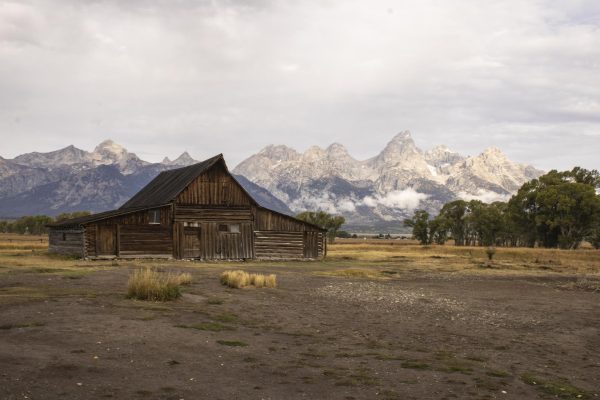
Mormon Row Historic District—one of the Tetons’ most popular destinations. Here you can find historic barns left by Mormon settlers from the 1890s. John Moulton’s barn and Andy Chambers’ residence are located here. The barns in the calm meadow, paired with a view of the Tetons, are a stop you should add to your list.
Oxbow Bend—Offers a view of a crescent-shaped flowing river and Mount Moran. On calmer days, the reflection of the Tetons can be seen on the water. Another popular viewpoint for sunrise and sunset. Also, a great place to view wildlife.
Snake River Overlook—An iconic viewpoint. A view of Snake River winding through the meadow and trees with the stunning granite Tetons in the distance.
Signal Mountain—Signal Mountain is a 7,727 ft mountain found within the park. The summit can be reached by car or a hike. The peak provides a panoramic view of Grand Teton National Park.
All of these views are great spots for either sunrise or sunset. Signal Mountain is a popular sunset location for park visitors. During my visit in September, I watched the sunset from Signal Mountain; the glowing meadow paired with the silhouette of the Tetons was remarkable. Grand Teton National Park is also a good option for stargazing, according to the National Park Service. The park has minimal light pollution, providing an array of constellations, moons, and stars.
Visitor Centers
Visiting national parks is my favorite kind of trip, and I recommend stopping at visitor centers when you do. Grand Teton has 7 visitor information centers throughout the park. Stopping at these locations is a good opportunity to learn about safety, park history, and wildlife. I enjoy stopping at visitor centers at the beginning of my trips to help plan where I want to go.
Wildlife
Grand Teton National Park is home to a variety of wildlife, which you are almost guaranteed to see. Grizzly and black bears, bison, moose, elk, eagles, and more can be found in the Tetons. Bears are very common in Jackson Hole. For this reason, it is not recommended to hike alone. Making noise while hiking is encouraged to prevent scaring wildlife. Bear spray is a must-have when hiking in the Tetons. Don’t leave backpacks unattended. While observing the wildlife, it is important to be cautious. Stay a safe distance from the wildlife, and don’t feed the wildlife. Remember, this is their home; don’t disturb their habitat.
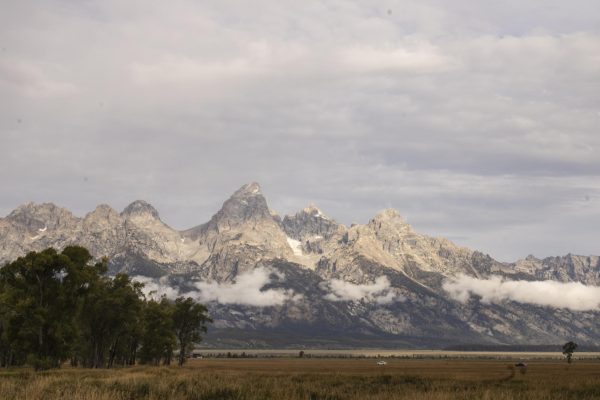 Why should you visit Grand Teton?
The Grand Teton entrance fee is about $20-35, but you have access to the park for 7 days. While the entrance fee can seem a bit pricey, especially for shorter trips, all of the money goes directly to the National Parks. Organizations like the Grand Teton National Park Foundation also work hard to sustain and restore the park. Contributions to national parks help protect the landscapes and wildlife so future generations can also experience these beautiful places.
Whether you are spending multiple days or fitting your trip into one day, as I did, remember to take it slow. Live in the moment, leave no trace, and embrace the serenity.
Bella Anhorn, my friend who accompanied me back in September, said, “The views are absolutely insane, mythical, and magical. The pictures don’t do it justice.”