
As the days grow warmer and snow melts into streams down the Wasatch Mountains, it’s almost time for University of Utah students to close their laptops, touch some grass, and take a much-needed summer break. While Utah’s “Mighty 5” is often a first choice for outdoor excursions, these parks often come with reservations, heavy crowds, and limited camping availability. For students hoping to avoid the congestion, here are five hidden gem road trip destinations within a six-hour drive of campus.
City of Rocks National Reserve, ID
Travel Time from Campus: 2 Hours 52 Minutes
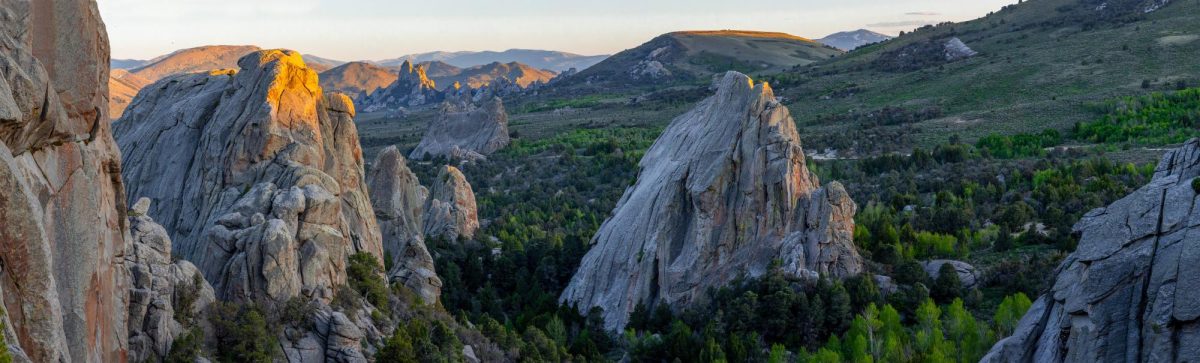
While the technicolor holds and grips at the Student Life Center can teach students some serious climbing skills, it may be time to try the real thing. Just beyond Utah’s northern border in the Gem State, visitors will find City of Rocks National Reserve, a destination known for its granite spires dramatically towering over fields of sagebrush desert.
Offering a quieter alternative to Salt Lake’s urban skyline, City of Rocks delivers something for every kind of adventurer. Whether you’re looking to rock climb, hike, camp, or hunt, this fascinating geological landscape provides both outdoor recreation and a glimpse into the region’s rich history. Shaped by erosion and home to striking arches and formations, the reserve also supports an impressive range of biodiversity, including mammals, birds, reptiles, and amphibians. Better yet, City of Rocks is pet-friendly, making it easy to bring your furry friends along for the adventure.
Recommended Hikes:
Great Basin National Park, NV

Travel Time from Campus: 3 Hours 50 Minutes
As you drive through a desolate desert and cross the Western border of Utah and Nevada, most would assume that there’s nothing out there but sand and sagebrush. Most would be surprised to find a high mountain, lush oasis filled with hiking, stargazing, and cave tours.
At Great Basin National Park, students can summit the highest peak in Nevada and witness the only existing glacier in the state at Wheeler Peak. In addition to walking along some of the oldest trees on earth—the Great Basin bristlecone pines. These trees are found only in Utah, California, and Nevada and are estimated to be between 4,700 and 5,200 years old. That means these trees began growing when humans developed from the Stone Age to the Bronze Age and during the rise of ancient cities like Sumer in Mesopotamia.
If the hikes aren’t appealing enough, Great Basin also offers cave tours through their Lehman Cave, filled with stalagmites and stalactites, and maybe even a bat sighting if you’re lucky. Most of all, bring your hammock and camera, as Great Basin is one of the best places in the lower 48 to see the Milky Way, thanks to its limited light pollution and exceptionally dark night skies.
Recommended Hikes:

Red Cliffs National Conservation Area, UT
Travel Time from Campus: 4 Hours 5 Minutes
For students looking to stay in the state of Utah, Red Cliffs National Conservation Area is a uniquely beautiful overlap of three dry-land ecosystems, including the Colorado Plateau, Great Basin, and the Mojave Desert. With these ecoregions diverging in Washington County, it creates a diverse landscape and habitat for animals like the threatened Mojave Desert tortoise and plants that grow nowhere else on Earth, like the dwarf bear claw poppy. Enjoy hiking, backpacking, and horseback riding through the glorious red rock along the Virgin River. This conservation area also fosters opportunities to find dinosaur tracks, pioneer history, and archaeological sites.
Recommended Hikes:
Craters of the Moon National Monument, ID

Travel Time from Campus: 4 Hours 30 Minutes
For students who want to know what it feels like to walk on the moon, visit Craters of the Moon National Monument, where the floor is actually lava! This is a road trip destination that has a fierce geological past and an uncertain present in its dormant but not quite extinct state. In this unique landscape, craters and lava flows tell the story of the earth’s past and help NASA prepare the astronauts of the future.
The park features fissure eruptions rather than a single giant volcano, spanning over 52 miles—a massive crack in the earth’s crust. This monument includes miles upon miles of trails for hiking and backcountry camping, with lava tube caving open in the summer. Craters of the Moon is made for students who aren’t interested in high-altitude hiking, with paved paths and/or backpacking routes. Students will witness the unique occurrence of trees, wildflowers, and various plants making their way through the dark black lava. Enjoy stargazing in a Certified International Dark Sky Park that’s right near other outdoor adventures such as Sun Valley, Idaho, and the Sawtooth National Forest.
Recommended Hikes:
Black Canyon of the Gunnison, CO
Travel Time from Campus: 5 Hours 40 Minutes

For students that have seen enough of red rock and granite canyons, they can travel to the western slope of the Rocky Mountains to find Black Canyon of the Gunnison National Park. Home to some of the oldest rocks in the US, these steep cliffs and spires are made of Precambrian rock with streaks of pink pegmatite. The forces of solar and natural erosion have naturally shaped this canyon for over 2 million years to create a gothic vertical ecosystem. This park offers opportunities for students to go camping, hiking, and rock climbing, all while watching wildlife, taking a scenic drive, and stargazing. Students may even have a rare encounter with Rocky Mountain bighorn sheep, black bears, and bobcats along their adventures.
Recommended Hikes: