

Snow or Sun?
2025 was a record-breaking year for Utah. Temperatures averaged 51.9°F (11.06°C). This broke the previous average of 51.3°F from 91 years prior, according to the National Centers for Environmental Information data.
The unusual heat during this time of the year is also concerning for the high population of winter enthusiasts throughout the valley.
“It is unfortunate that we are in the midst of winter and there’s no snow out,” said Breck Nealis, a University of Utah student whose decision to attend the U was largely based on winter sports. “It’s definitely not as much snow, and it’s definitely a little warmer than last year.”
If the lack of snow continues, then Utah will be in trouble come spring when the low water levels and extreme heat begin to creep their way into the valley.
The lack of snow has many causes, but according to Monica Traphagan, a meteorologist for the National Weather Service, the main cause was weather patterns. 2025 started with low snowfall in the Salt Lake City area. Storms heading to central and southern Utah changed course, causing higher temperatures and less snowpack.
These missing storms are caused by high pressure waiting above the western U.S. This pressure “tends to slow down the atmosphere’s forward momentum,” said Jon Meyer, Assistant State Climatologist. “It really develops a ridge of high pressure off the West Coast, and that deflects a lot of the storm activity into the Pacific Northwest.”
This ridge of pressure comes from cooler sea temperatures near the equator, which drifts storms away from Utah.
While Utah’s winter pattern last year has been concerning, Meyer provides some reassurance, saying, “We’re in an area that experiences feast or famine when it comes to winter storms.” Meyer continues. “There’s a lot of variability from year to year depending on how the Pacific, Atlantic, and Arctic patterns all connect.”
Regardless of whether Utah sees snow before April, the effects of low snowpack and what that means for Utah’s spring and summer are key in understanding Utah’s delicate weather cycle.
Utah’s Real Winter
Utah experienced the opposite challenge during its snow-crazed winter in 2023, when it became the wettest winter in Utah’s recorded history, according to Natural Resources Conservation Service data.
As the snow gathered in the mountains throughout the season, there was worry about what would happen during spring when rising temperatures would cause rapid snowmelt.
Sure enough, on April 18, 2023, Utah Gov. Spencer J. Cox issued a state of emergency due to flooding, avalanches, mudslides, and other consequences of the record snowpack. Local and state governments issued over 2 million sandbags during this time.
Utah residents breathed a sigh of relief when the flood dangers came and went with minimal damage.
2026: A Year Without Water?
Now, there is a different story. In December, the Utah Division of Water Resources reported that 93% of the state is in a drought, compared to the 19% last year at the same time.
If these warm and dry conditions keep up, the already dwindling water supply will decrease further. Drinking water, water for agriculture, and especially water for the Great Salt Lake will be in danger.
Having less water will affect the ecosystems in Utah, causing harm to the biodiversity in the state. According to the Utah State University Institute for Land, Water, and Air, the Bonneville cutthroat trout is one of these animals that will be impacted by low snow levels and warm, unreliable streamflow.
Not only are environmental impacts a concern, but tourism and recreation will also be altered by this never-ending warmth. Less snow means that the skiing and snowboarding season will shorten. These winter sports industries that rely on snowfall will lose revenue, a fact that is especially alarming with the 2034 Winter Olympic Games looming on the horizon.
This underwhelming winter is not just bad luck. While the lack of precipitation is in part due to the weather patterns that can’t seem to leave, the real cause of these rising temperatures is climate change.
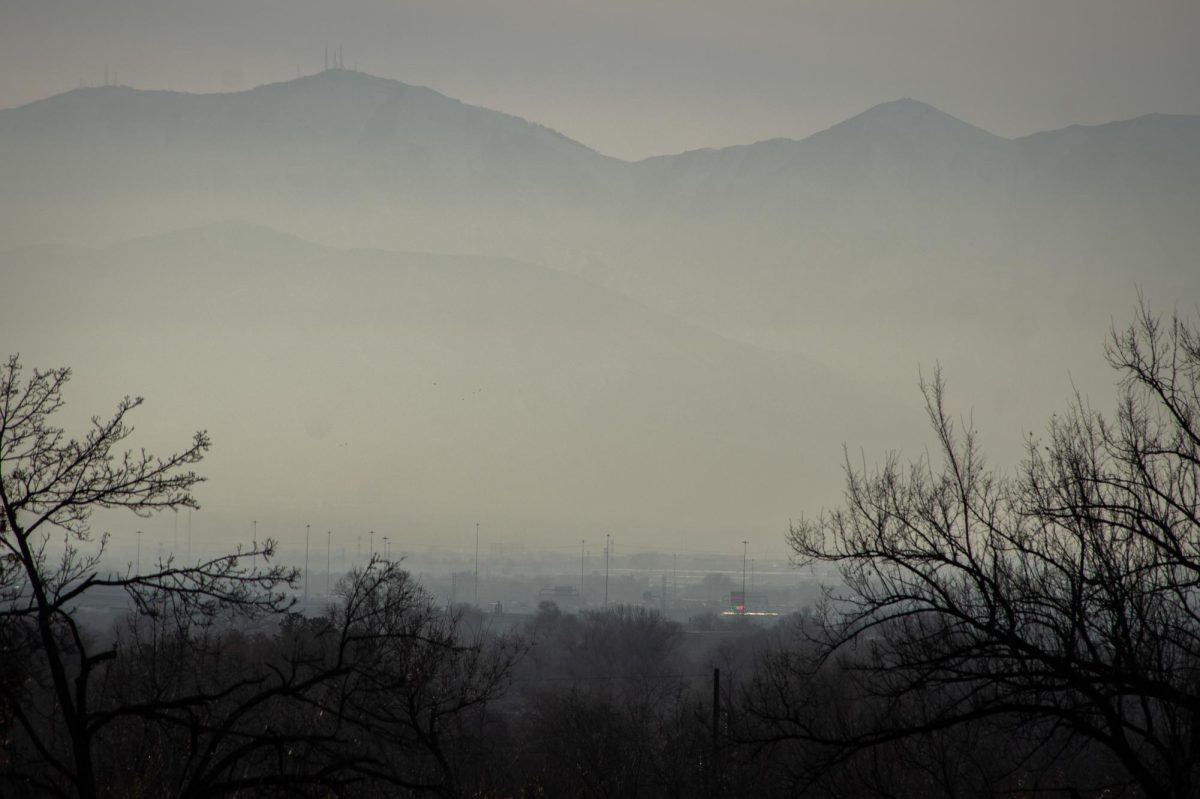
“You can usually see the mountains … I don’t know if it was yesterday or the day before, but you couldn’t even see them, and that just sucks,” said U student Alex Gilsoul. “It’s not good for our health.”
Warmer climates affect air quality and weather. In Utah, the cold air stays trapped in the valleys from a layer of warm air above, which creates inversion. Bad air quality can create health issues and lead to environmental loss, which is why understanding the effects of a warmer climate is so important.
The Key is The Great Salt Lake
The Great Salt Lake is the center of everything. Without runoff water flowing into the Jordan, Bear and Weber Rivers, there is little to no water going into the Great Salt Lake. Less water going into the lake means that Utah’s ‘Greatest Snow on Earth’ is in danger.
Utah’s world-famous snow is fueled by the lake effect. Storms begin over the Pacific, where they then move east. The storm meets the warm and humid air of the Sierra Nevada, causing the air to rapidly cool and begin to rain. However, not all the storm is used up; the remaining storm makes its way over Utah. The Great Salt Lake recharges the storm with its salty water, and when the storm reaches the ski slopes, it’s the perfect snow.
So, as Utah’s winter gets shorter and shorter, it’s not just the spring and the summer that will be affected, but the entire Utah weather cycle. It all has to do with Utah’s biggest lake. Saving the Great Salt Lake is imperative through water conservation, community support, and public awareness.
“Utah’s water supply has been driven by extremes and has only experienced four ‘normal’ snow years in the past 30 years,” Candice Hasenyager, director at the Utah Division of Water Resources, said. “The one thing we can control is how we use our water and what impactful decisions we make to be good water stewards.”
The effects of the Great Salt Lake’s depletion are all around us. In the ski slopes, in the warm air and in the air quality. Awareness and making efforts to slow climate change and increase water can allow Utah to save winter now and for the future.