

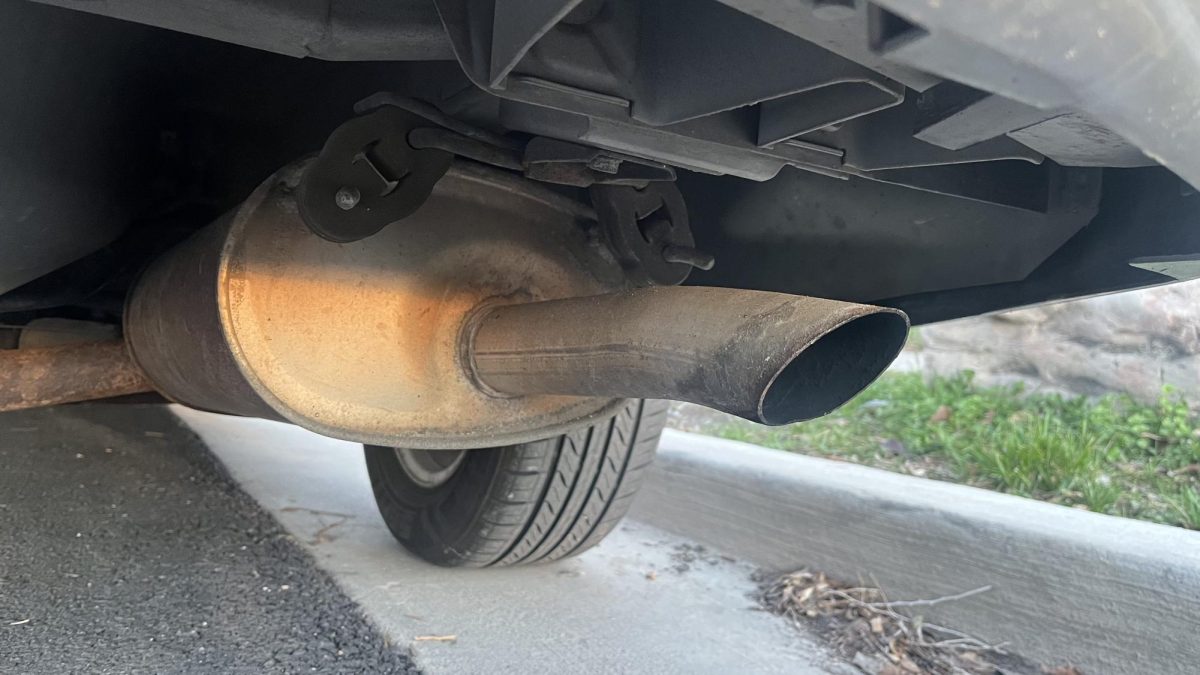
The Endangerment Finding underpinned federal authority to set greenhouse gas standards under the Clean Air Act. In a move aligned with the current administration’s push for general environmental deregulation, and answering the call of section 6(f) of Executive Order 14154, the Environmental Protection Agency (EPA) repealed its own 2009 ruling, the Endangerment Finding, on Feb. 12 of this year. This action — which President Trump called “the single largest deregulatory action in American history” — has broad implications for this country’s ability to combat climate change.
What does this repeal mean for our humble existence here in the Wasatch Front? First, I want to explore the complex history of the Endangerment Finding and its legacy, but I will leave you with a hint for now: look outside.
Let’s quickly untangle this word everyone keeps throwing around. What is colloquially called the “Endangerment Finding” is not a single finding but a pair of separate but complementary verdicts: the Endangerment Finding and the Cause or Contribute Finding. The Endangerment Finding is the scientific conclusion that concentrations of six key greenhouse gases (carbon dioxide, methane, nitrous oxide, hydrofluorocarbons, perfluorocarbons and sulfur hexafluoride) in the atmosphere threaten public health and welfare. The Cause or Contribute Finding is the legal determination that emissions from vehicles and engines described in Clean Air Act section 202(a) cause, or contribute to, such greenhouse gas pollution.
Now that that’s cleared up, let’s dive into the history. If you’re a dweeb like me, strap in because you’re in for one hell of a ride (if you aren’t, I’m so, so sorry).
All Aboard the Endangerment Finding Time Machine
This whole battle started on Oct. 20, 1999, when the International Center for Technology Assessment, along with 19 other organizations, petitioned for the EPA to regulate carbon dioxide, methane, nitrous oxide and hydrofluorocarbon emissions from motor vehicles under the Clean Air Act. (You could argue it started with the ratification of the Clean Air Act way back in 1963, but I’m trying to keep this article under a reasonable length). In 2003, the EPA denied this petition, citing that it was not granted authority to regulate greenhouse gases by Congress and that such standards “for motor vehicles [were] not appropriate at [the] time.”
This decision was challenged in court (Massachusetts v. EPA), eventually making its way to the national stage in the Supreme Court. In a 5-4 decision on April 2, 2007, the Court ruled that greenhouse gases do qualify as air pollutants under the Clean Air Act. The EPA, therefore, has the authority to regulate emissions of these gases from motor vehicles. In response to the EPA’s claim that regulation of greenhouse gas emissions was unneeded, the Court determined that such a claim was not rooted in statute. In order to make such a claim, the EPA needed to determine whether or not motor vehicles cause or contribute to greenhouse gas pollution.
This ruling opened up the possibility for the EPA to determine whether or not greenhouse gas pollution was a threat to public health and if motor vehicles contributed to such pollution. On April 17, 2009, the Administrator of the EPA, Lisa P. Jackson, greenlit the proposition for the Endangerment and Cause or Contribute Findings. After a 60-day public comment period, totaling 380,000 comments (both written and oral) and a subsequent review and editing process, the Findings were issued on Dec. 7, 2009 as the “Endangerment and Cause or Contribute Findings for Greenhouse Gases Under Section 202(a) of the Clean Air Act.”
In response, several petitions and legal challenges knocked on the EPA’s door. On July 29, 2010, the EPA denied 10 petitions to reconsider the Finding, stating that they provided “inadequate and generally unscientific arguments and evidence” to support their claims. Four more petitions related to the Findings were denied on April 21, 2022, with the EPA stating, once again, that the arguments and evidence were inadequate in challenging the integrity of the science behind the Finding. The Endangerment Finding, and subsequent greenhouse gas regulations and permitting, were upheld in the U.S. Court of Appeals–D.C. Circuit on June 26, 2012.
With the enactment of these Findings, the EPA could make regulating greenhouse gases a legal requirement for the auto industry, oil/gas industry, power plants and other greenhouse gas emitters. This gave the federal government more power to curb greenhouse gas emissions and, by extension, combat climate change.
On Jan. 20, 2025, Donald Trump was sworn in for his second term. On the very same day, he issued Executive Order 14154, Unleashing American Energy. One of the requirements of this order was for the Administrator of the EPA (Lee Zeldin) to make recommendations “on the legality and continuing applicability” of the Endangerment Finding. On March 12, 2025, Lee Zeldin announced that the EPA would begin an official reconsidering of the Finding. After a 52-day public comment period, totaling 572,000 comments, and four days of virtual public hearings, the EPA released its final decision to rescind the Endangerment Finding.
This brings us to the present day, where we begin to watch the aftermath unfold.
So What?
Since the Endangerment Finding served as the legal foundation for the federal government to regulate greenhouse gas emissions, its repeal takes that authority away. Now, Congress will have to amend the Clean Air Act to explicitly give the EPA that power, rather than leaving it up to interpretation. This doesn’t nullify all forms of air pollution regulation, just for greenhouse gases. The EPA will still be able to set standards for criteria pollutants, such as lead, particulate matter and ozone, and air toxics (AKA hazardous air pollutants) — airborne chemicals that cause cancer or have other adverse health impacts.
The implications of the repeal are being told by two opposing sides — two bands playing dissonant songs.
Lee Zeldin and the EPA (along with the Trump Administration) are championing it, stating it will cut burdensome regulations on the auto industry, improve consumer choice and save an estimated $1.3 trillion in vehicle technology and manufacturing costs and electric vehicle and charging infrastructure. They are positioning it as a restoration of the American Dream, focusing heavily on the role personal vehicles play in upward mobility. In their eyes, the Endangerment Finding repeal undoes 16 years of damage to the auto industry and the American people.
Environmental organizations, climate scientists and health experts are singing a different song. Their view goes beyond the auto industry, bringing attention to the potential for this repeal to cause deregulation across multiple sectors, including fossil fuel power generation and the aviation industry. Both of these industries have seen regulation from the legal precedent set by the Endangerment Finding. Such a sweeping step back, in their eyes, affects the American people in a very different way.
In a news release from the American Public Health Association (APHA), Georges C. Benjamin, MD, the executive director of APHA, expressed that “this action will exacerbate the health threats we are already seeing from climate change, including increased heat waves, more air pollution and deadly wildfires.” The news release includes statements from leaders of three other public health organizations — the American Lung Association, Alliance of Nurses for Healthy Environments and Physicians for Social Responsibility — sharing similar sentiments.
According to the Natural Resource Defense Council (NRDC), the effects of climate change are even more abundant. In a fact sheet about the Endangerment Finding, they add the health impacts of increased ranges for vector-borne diseases and increased exposure to pollen and aeroallergens (allergens in the air). In addition to direct health impacts, effects on the environment may lead to strains on the public. The NRDC lists harms on U.S. agriculture from droughts and floods, declining water resources from decreased snowpack, increased drought and unpredictable precipitation patterns and sea-level rise, which increases risk of storm surges and flooding for coastal communities.
This anti-repeal camp sees the recent action from the EPA as undoing 16 years of climate change mitigation, environmental safeguarding and public health protection. I think Katherine Hayhoe, chief scientist of The Nature Conservancy, sums up this argument best, stating, “Reversing it wouldn’t change the science — it would only make it harder to mitigate the risks we’re already facing, from extreme heat to flooding and increasingly severe wildfires.”
Impacts on the Wasatch Front
Do you remember that hint from earlier? Have you taken a peek outside? If you didn’t, I’ll tell you what you probably would have seen, or rather, what you wouldn’t have seen: snow. This winter has set the record for the warmest since record-keeping began in 1874, according to the National Weather Service, with temperatures sitting at 7.6 degrees Fahrenheit above normal.
Besides increased temperatures, other impacts of climate change have been on full display in Utah throughout 2025 and the beginning of 2026. The Salt Lake Tribune reported that, at the beginning of February, Utah had about one-third of its normal snowpack. Almost 165,000 acres of land were burned in last year’s wildfire season, according to KSL, with a $191.8 million price tag just to suppress the fires. That’s more acreage burned in a year since 2020 and more than the last three years combined.
The immediate impacts of the Endangerment Finding repeal will be hard to see. A little bill floating around the Utah legislature, however, may give us a hint as to how Utah is able to respond to shifting federal regulations. Senate Bill 234 is scheduled for its 3rd reading in the House of Representatives (meaning it has already passed through the Senate and is close to passing through the House).
If signed into law, this bill would set federal regulations of pollutants and hazardous waste as the ceiling for state regulations. As we see regulations on greenhouse gas emissions disappear at the federal level, Utah’s ability to set new greenhouse gas standards would also disappear.
In the coming years, we may find regulating our greenhouse gas emissions to be tougher and tougher. In an area with a high concentration of power plants, refineries and smelters, this could be a major topic of issue.
The Response
In response to the Endangerment Finding rescission, a petition challenging the action was filed in the D.C. Circuit Court of Appeals by the American Public Health Association. Seventeen other organizations joined the APHA in the petition, including the Environmental Defense Fund, American Lung Association and Center for Biological Diversity. More information can be found in this article from the Courtroom News Service.
It may be the case that the majority of the American public do not support the EPA’s action. In an analysis conducted by the Yale Program on Climate Change Communication with over 35,000 responses across 31 surveys covering all 50 states and D.C., it was found that 74% of survey-takers support regulation of carbon dioxide as a pollutant. Will the EPA be able to ignore this amount of public support? (Likely yes, but it doesn’t hurt to wonder).
A Brief Moment of Candor
If you’ve made it this far, you’re a trooper. I try to end most of my articles with some kind of hopeful or quippy epilogue; I pride myself on being a generally optimistic person. To be honest with you, however, this topic is nearing the last straw. It seems like just another pancake on the stack of EPA actions antithetical to their mission. This is the first sentence on the EPA’s mission page: “The mission of EPA is to protect human health and the environment.” The Feb. 12 rescission fails this mission on both accounts. If you can believe it, I’m finding it difficult to think up something cheerful …
But here is my best shot:
In times of immense adversity, it’s important for us to remember how far we’ve come. One hundred years ago, environmentalism barely existed. Now, there are dozens of prominent environmental organizations in the U.S. and millions of environmental advocates. We’ve enacted policies safeguarding public lands and protecting air, water and wildlife. We’ve curbed our use of chlorofluorocarbons, and the ozone layer is repairing itself. The reality of climate change is increasingly accepted, and its scientific backing continues to grow.
There are setbacks, and at times they are more severe than we’d hope, but I would argue the general trend is erring on the side of sustainability. In a 2003 speech, author and activist Arundhati Roy said, “Another world is not only possible, she is on her way. On a quiet day, I can hear her breathing.” As we continue to advocate for issues of environment and public health — and challenge the actions of those who disregard them in favor of industry and exploitation — more people will realize its importance and join in. I truly believe we are on the precipice of real change. If I listen closely, I can hear that other world breathing. Close your eyes and give it a try.
I hope that helps.