

 On any given morning in Salt Lake City, Utah, you’ll hear the honk of car horns, trains whizzing by and the clanks and bangs from countless construction sites. Yet beneath the noise of a growing city lies a sound so ingrained in day-to-day life that it often goes unnoticed. While most people focus on the bustle around them, some sit quietly with a pair of binoculars and a careful ear, waiting for the best sound the city has to offer — birds chirping.
What is Birding?
According to the Cambridge Dictionary, birding is defined as “the hobby of watching wild birds in their natural environment.” While this hobby can seem strange to some, for others it’s a lifestyle. With projects like ‘Big Year,’ birders attempt to see as many bird species as possible in a designated geographical area within a calendar year. Like Mark Obmascik’s book The Big Year — that was later adapted into a movie starring Jack Black, Owen Wilson and Steve Martin — it exemplifies how birders must be selfish in their endeavor of a big year. Birders attempting this feat go to the extremes and could spend over a year away from home and countless dollars attempting to identify hundreds to thousands of bird species. An attempt to complete a big year can be competitive, expensive and ruthless, with winners stopping at nothing to see the most species. However, Salt Lake City residents are in luck, considering the Great Salt Lake alone is home to over 300 species of birds (that’s over 12 million birds yearly).
According to Tim Webster, a University of Utah anthropology professor and birder, Utah is an especially unique place for birding due to its variety of habitats. He says that while other states may have singular ecosystems such as desert, basin, mountain or wetland environments, they most definitely do not have the Great Salt Lake or the combination of all of those ecosystems in one state.
“Everything kind of comes together, and you don’t have to drive that far to see a pretty incredible range of birds,” said Webster.
Amongst many Utah birders, the hot spots for birding are endless, and you may even be able to see a wide variety of birds from your own backyard in what’s called “backyard birding.” One of the best places to bird watch is the Antelope Island Causeway and St. George, Utah according to Gaby Karakcheyeva, a University of Utah student and a founder of the U of U Wildlife Society.
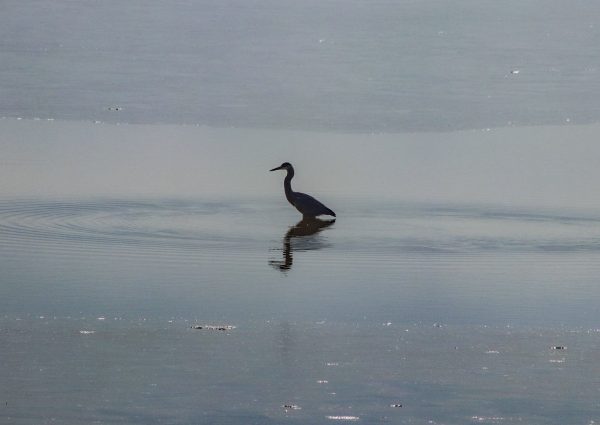
“[The Great Salt Lake is] kind of a unique situation that we have,” said Bryant Olsen, a prominent birder and conservation ecologist for Tracy Aviary. “I’m talking about really high variety and really high concentration [in] a relatively small area.”
Other notable birding locations include Farmington Bay and the post office at Alta Ski Resort, where bird feeders attract a variety of high-elevation birds, according to Webster. University of Utah student and K-UTE writer Tanner Nicholson adds that birding in Salt Lake is especially unique because of the many different seasonal and perennial birds that fly through during migratory periods. Nicholson says that listening to the different bird songs throughout the year gives him a meaningful sense of time and direction.
“Half the time, if you don’t [have] a good eye, you don’t see anything, but you can still kind of look and feel at home when you can know what’s making that sound,” said Nicholson.
Popularity Rises as Populations Decline
Birding has become increasingly more popular since the COVID-19 pandemic according to The National Audubon Society, with one in three adults participating in the hobby. However, while the numbers of birders increases, the number of birds drastically declines. According to the Cornell Lab of Ornithology, research conducted in 2019 found that bird populations have declined by nearly 3 billion, or one in three birds since 1970.
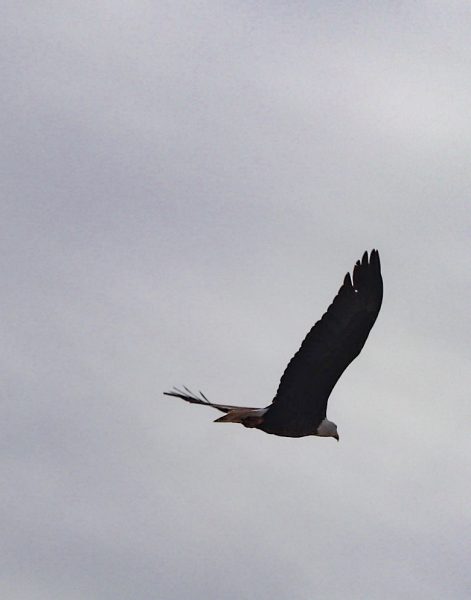
Olsen states that climate change is a huge threat impacting birds all over the world. He says that Utah would typically have over a foot of snow on the ground in January, but this year snow levels are barely above the historic low. He says that the lack of snow not only affects the amount of precipitation, but also the amount of evaporation and contributes to a decline in insect species at the base of the food chain. These droughts can also cause birds to have reduced breeding success and reduced population diversity according to the U.S. Fish and Wildlife Service.
“People get so caught up in their modern life they don’t really see the struggle of how hard it is for wildlife,” said Olsen. “I mean, some of these birds are undertaking these massive migrations across huge landscapes. Many of the birds that you see commonly spend half their life in South America.”
Birds are not only an essential part of Utah’s ecosystem, but they also have the ability to teach individuals about evolution and the environment, according to Webster. Understanding birds and their behaviors in their natural habitat can help individuals connect to nature even if it’s as simple as noticing the birds that thrive in an urbanized area.
“It’s so easy these days with streaming everything to … stay inside, but there’s just such an incredible world around us,” said Webster. “I just feel that birds are one of the most accessible ways, or one of the best ways, that we can connect with [the] environment.”

How to Take Flight
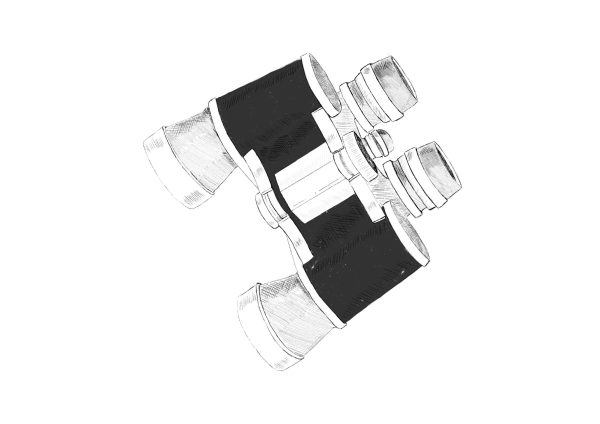
Salt Lake City offers a multitude of opportunities for bird watching with accessible ways for beginners to take flight. Olsen advocates that the most essential tool for beginners is a good pair of binoculars. He says they don’t need to be overly expensive, but a good pair of binoculars will help you spot birds more easily and appreciate their vibrant coloring.
The eBird app is a great way for birders to list and keep track of the birds they have identified according to Webster. Additionally, apps like Merlin can help beginners identify bird sounds, and lets users upload photos for help with identification. While these apps are helpful for beginners, Olsen advises these apps can breed competitive nature and take the mindfulness out of birding. He recommends that beginner birders take the time to be present and slow down when identifying species.
Webster also advocates for joining group bird walks, whether you join through Facebook, the Salt Lake Audubon Society or Utah County Birders. These groups often go on birding trips, welcome newcomers and can usually help lend an extra pair of binoculars if needed. For University of Utah students looking to bird on campus, another option is signing up for Bird and Breakfast with the U of U Wildlife Society. Founder Gaby Karakcheyeva hosts a campus breakfast and bird watch on the first Friday of every month. She says observing birds is the best way to learn as you identify the niches in their behavior, and birding with an experienced birder can be extremely helpful to beginners.

“I love getting people into birds, and I love getting people really excited about the natural world around them,” said Karacheyeva. “People really don’t pay attention to the things that happen day to day. Like, on campus, if you’re just like walking from … one class to another, you really will never notice all the different birds that are around.”
For Salt Lake City residents, a local opportunity to get involved with bird conservation is the Tracy Aviary. Whether you visit the aviary at Liberty Park or take a guided walk at their nature center at Pia Okwai, you’ll have the opportunity to view and learn about multiple species of Utah birds. Volunteer opportunities are also available at Tracy Aviary for horticulture (plants), conservation, aviculture (caring for birds) and education.
“It can be as passive as you want it to be. You can just go, sit on your front porch, you can get a bird feeder and they let them come to you or you can just go walk and listen. I mean it’s, a lot of the fun … they’re all around you,” said Nicholson.
Emma
Apr 26, 2026 at 1:57 am
This article really makes me want to buy a pair of binoculars!