
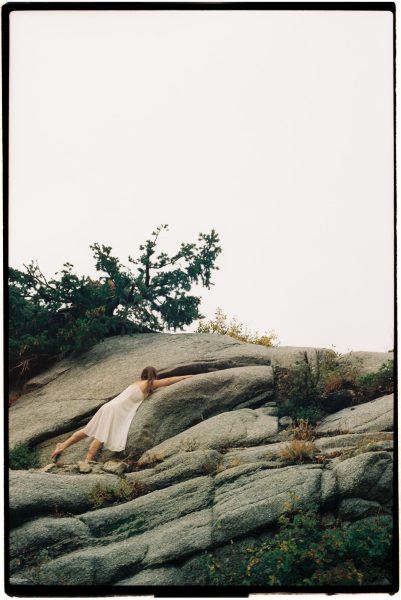
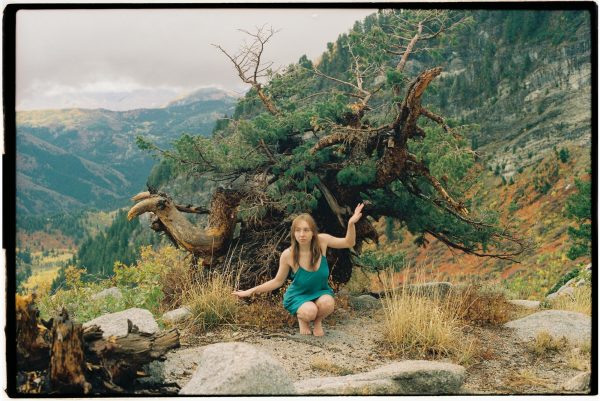
 Back in October, I set off into American Fork Canyon in the name of nature and art and feminism. We drove past Tibble Fork Reservoir, then came to the gravel and dirt road that led us to Silver Lake’s trailhead. Forecasted rain was inevitable, but the spirits of the morning adventure were high. Rain poncho: check. Umbrella: check. Cameras: check. Insufficient warmth: check. And we were off, dodging puddles in the dirt trail and inching our way up to the lake. We crossed a stream, hopping from rock to rock and getting blown around by bouts of wind. My backpack was full of cameras with a poncho slung on top; the three other girls and I did our best to stay dry (not very successfully, I might add). I had been contemplating the idea of ecofeminism for weeks, and I planned to express it.
Nature and women: their histories are entangled in a series of oppression since the rise of patriarchal societies. With the rise of the patriarchy, we see the increase of domination of many things, but two prominent examples include women and the natural world. The desire to control and exploit became synonymous with a patriarchal society. In order to justify this kind of hierarchy, there needed to be a re-evaluation of values from previous societies. There needed to be a demonization of the other and glorification of the ideal. The ideal became man and civilization, and the characteristics associated with men formed into strict gender roles and stereotypes adjacent to civilization. Men were to be tough and domineering and unfeeling. Women then had to take up the counterpart of this, being told they are emotional and fluid and weak. Nature became primitive and undesirable, something to be tamed, not existed with. The former characteristics were valorized, and the latter debased. Women also became associated with nature—reproduction and the female body were seen as primal and less than human. Men were elevated to the realm of culture and civilization, somehow closer to and more deserving of humanity than women.
Val Plumwood details this idea in her work Feminism and the Mastery of Nature and identifies these contrasting pairs as dualisms: male / female, culture / nature, reason / nature, human / nature (nonhuman), reason / emotion, mind / body (nature), and production / reproduction (nature). The first in each pair is connected to men and the human, being the superior category, while the latter is traditionally associated with women and nature, the dominated or oppressed.
Under this value system, women and nature become secondary to the pursuits of men. They are resources to be pilfered and exploited, reduced to the status of subhuman. The environment is endlessly extracted as if it were an eternal cornucopia of product, as well as bulldozed for the purpose of human ingenuity. Women have traditionally been the holders of unpaid labor and unrecognized achievement, providing the background for the acknowledged achievements of men. They are expected to hold the invisible labor of emotional and domestic dealings, and their bodies are objectified.
 As humans have separated themselves from the natural world in an effort to see themselves as better than and above the ways of nature, men have also distanced themselves from the feminine in an attempt to gain the acceptance of the patriarchy. And so as a society we destroy, we separate, and we oppress. We create an us and them. We distance ourselves so cleanly that equality seems as though it were an egregious sin. A transgression against the ‘natural’ way of things. However, this ‘natural’ way is not only not natural but also fully manmade.
When we actually study nature, we see the traditional feminine and masculine characteristics intermingled in an endless display of variation regardless of gender. These frameworks break down and invalidate the supposed necessity of this division. Orcas, elephants, and bonobos organize into matriarchal social structures; many flowers possess both male and female structures; some even express sexual flexibility, like the green dragon. Multiple fish species, such as clownfish and ribbon eels, exhibit sequential hermaphroditism, where they change gender throughout their lifetime. There is such a lack of normativity that no gender roles can be applied to nature, and thus there is no inherently ‘natural’ way to organize humanity.
Ecofeminism argues that there needs to be an upheaval of our current value systems. There needs to be a neutralization of these contrasting pairs and reappreciation of the natural and feminine. All people need to recognize this hierarchy of values and the way it is impacting our relationship to one another, ourselves, and the environment.
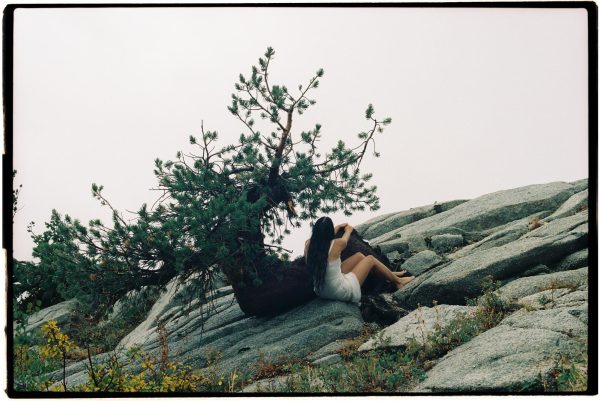
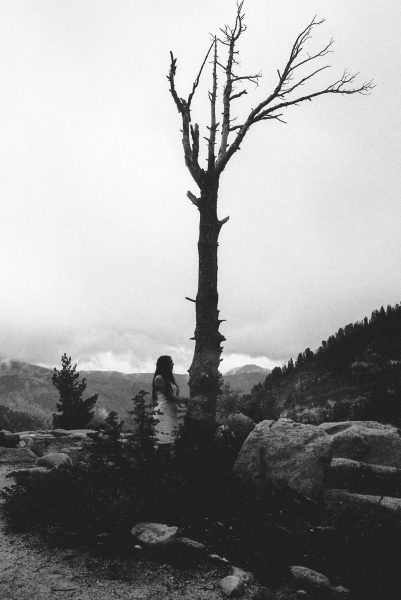
As we arrived at the lake, windblown and red-cheeked from the steep incline, mist encompassed the tips of surrounding mountain tops and kept rainfall at bay. The autumnal colors of foliage reflected off of still water and surrounded slabs of smooth rock. I attempted to absorb the land around me and find imitations of humanity in the natural world. To blur the lines between human and nature, finding the place where we fit into the environment, not apart from it. I sought the feminine in the landscape, the power that is held in such qualities—the reflection of the feminine in the women hiking with me and in the earth.
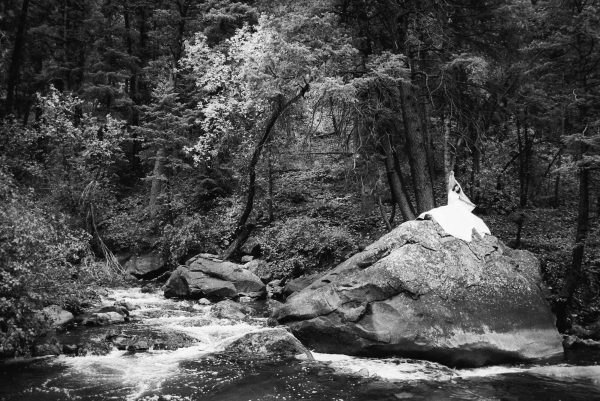
Just as water flows in a river with a gentle presence, over years it shapes the channels of this earth with precise wisdom of where best to run—a feminine leadership uses balance and flexibility, adjusting to the needs of the team, moving with wisdom and grace to reach goals. Trees grow in community, building their strong base from symbiotic relations with soil and microbes and fungi to nourish and grow their trunks out into branches and sky-reaching limbs. Feminine qualities tend to emphasize community and equality, a sharing and relational existence with the world, a belief in the collective, and care. Rocks hold invisible stores of labor and work; they hold wisdom from an archaeological grasp of time that supersedes that of humanity’s time—femininity has an emphasis on the future, protecting the present in order to sustain prosperity using matrilineal wisdom.
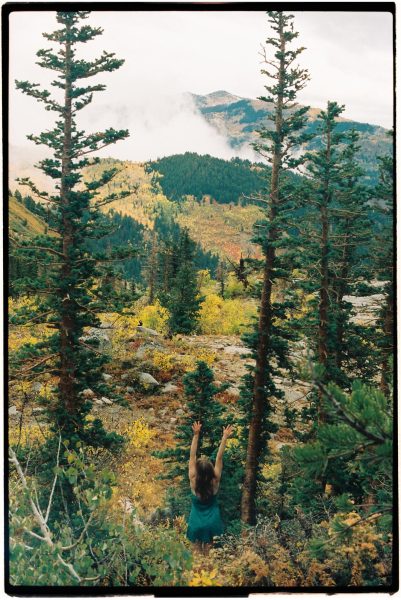
As these women posed with rocks and trees and rivers, I saw the femininity of the landscape and the reflection of these qualities in one another as if in conversation. They embodied the power of these traits and embraced the natural world with it. While I used women as models for this piece, men and women alike need to embody these characteristics that have been deemed feminine. I also use the word “feminine” as it has been assigned to these characteristics throughout history, but these characteristics exist in all people and to varying degrees. The key is to change the perspective on these traits and elevate both women and nature in the process—to see the value and essentialness of them in order to access the power there that has been denied for so long. We are a part of nature, not separate from it, and as we study femininity, we learn to incorporate ourselves into this system that sustains all life on earth with compassion and care.