

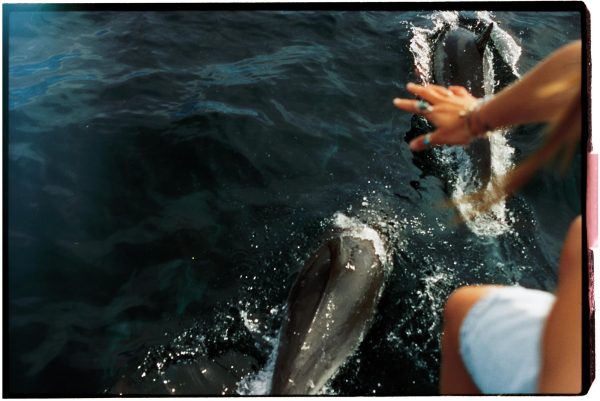
 Fins slice the glassy water of the bow’s wake. There’s one and then two and then three dolphins swimming alongside us, matching the pace and direction of the boat. They see the boat as a vessel to connect with something that they can interact and play with. They wish to weave in and out of its pull. Into the orbit of its physical push against the water and out into the currents of the ocean. A dolphin to the side of the boat is like an acrobat performing as it arches in its perfect form of a crescent moon, flying above the water’s surface. In mid-air, I swear I see a cheeky smile. This undeniable energy of play and curiosity. An inter-species connection and desire to be in a single shared arena of interaction. An appreciation of fun.
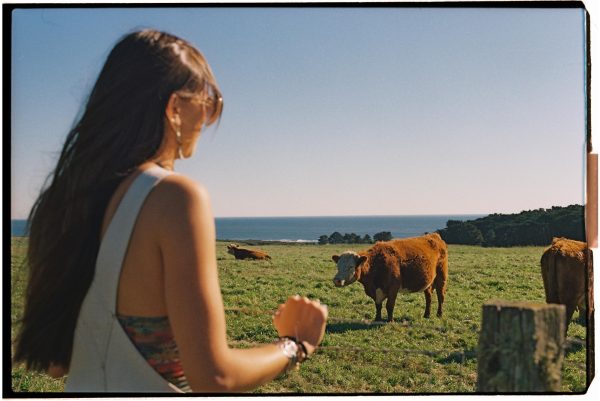
In our high-paced, news-ridden, and schedule-dominated lives, things can feel very serious indeed. We chase the next achievement, we set goals, we watch horrifying news headlines roll in, and we are expected to remain sane? Through it all, we must remember first and foremost to be human. To be human and to be a creature of this earth means embracing play. Play and curiosity are the cornerstones of how we learn. From the moment we’re born, we are thrown into the arena that is life, but we don’t gain new experiences and learn new skills by living in fear of it all. We learn by playing with life. Flirting with the possibility of some new discovery, some story to be told.
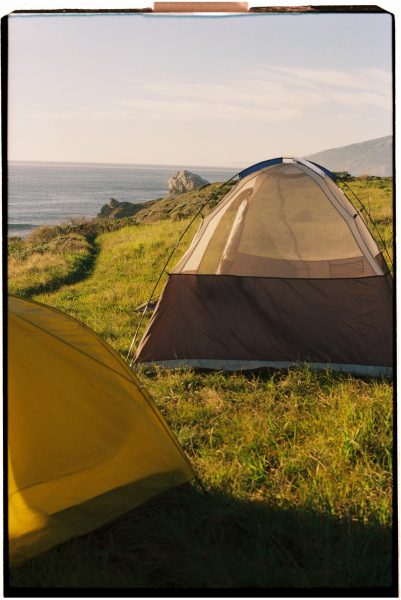 We will most certainly be faced with heartache, disappointment, and all other varieties of uncomfortable experiences and emotions—life is complex after all. Curiosity helps us ride these waves, though. We remove judgment, and we replace it with interest. The more we dig, the more we know, the more complexity and nuance we can embrace. The heaviness may alleviate as we see the world as something to discover, not simply to be endured. We open ourselves to the connections of the world that exist, waiting for us to see them and indulge in their essence. We can open ourselves to the nonhuman world as well—see the wonder in the first blossoms of spring, observe squirrels as they ravage your garden, and feel the breeze as it brushes your skin at the top of a mountain. We forget to notice these things when we lose a sense of curiosity, and when that is gone, we miss so much. The world passes by without us even noticing, and we are stuck in the internal world of our own making, not the physical world of our external reality. Even better is if we can play with what we notice. We live in a time that is constantly moving forward; I would much prefer to play with the time I have than stress over it. That doesn’t mean we don’t feel and experience the negative, but we see a way to learn and play with it instead.
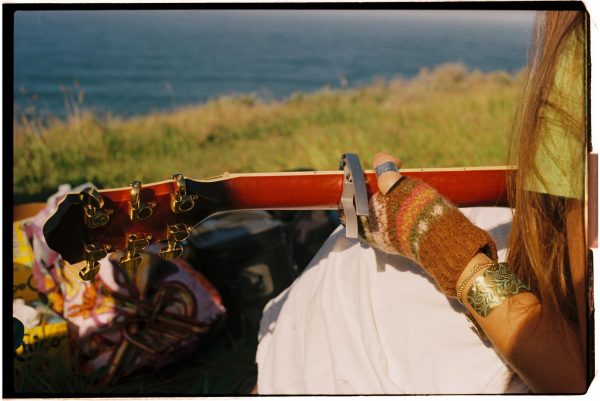
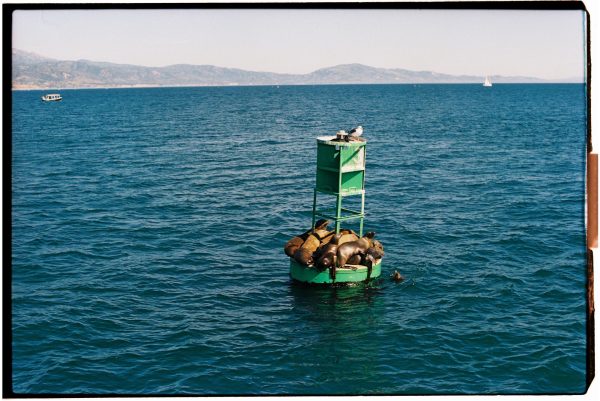
We are not the only species to engage in this behavior of play and curiosity, far from it. Many species use play as a way to learn as babies and carry it into adult life. Dolphins are one species that is a master of play. On my trip to Santa Barbara over spring break, we came across dolphins every time we went out on the boat. They are such curious and playful animals, so interested in what we are up to as humans and so willing to engage. Dolphins exhibit play in all sorts of ways and in ways that we may find familiar as humans. They have been observed to engage in acrobatics, tossing objects like sponges and seaweed, riding boat wakes, playing with one another, and interacting with other species like humans and dogs. Playing for dolphins serves much the same purpose—as young dolphins, it helps them learn by being curious and playful with their surroundings, it helps them form social bonds, and it has been shown to relieve stress as well as help them think creatively. Playing helps dolphins think creatively to solve problems in situations that are low stakes, increasing their cognitive function overall.
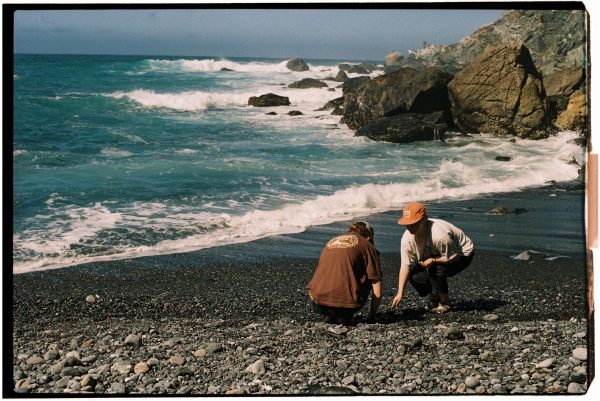 Within the environmental movement, curiosity is a foundational need for being able to appreciate the earth. Having a curious outlook towards nature helps us foster a connection with the earth. Curiosity is what creates relationships. It fosters the bond and innately challenges us to ask questions. When we see nature and we ask questions, we naturally dig deeper into that world. Knowing and witnessing fosters love and appreciation. Robin Wall Kimmerer wrote in Braiding Sweetgrass, “Knowing that you love the earth changes you, activating you to defend and protect and celebrate. But when you feel that the earth loves you in return, that feeling transforms the relationship from a one-way street into a sacred bond.” With play and curiosity, we can begin to transform our relationship with the earth itself into a reciprocal bond that takes us from appreciating the earth to interacting with it and feeling the gifts that it gives us. It is the land that we walk on, the waters that we swim in, and it is the air that we breathe. Everywhere we go, the earth’s blessings manifest into our every action.
At the beginning of each year, I like to choose a word to embody. So, as I have done each year near New Years, I pulled out my journal and began to brainstorm what that word for 2026 might be. What idea I wanted to embody for the next 365 days of my life. As I sorted through all the words and pondered what to embrace, the word “curiosity” came to me. I thought about when I have felt most enthralled with the life I’m living and engaged in the world and realized those times were when I was enveloped in the realm of curiosity. Judgement of the self and others slips away, and a new feeling of awe and appreciation is allowed to set in. This feeling permeates itself through the natural world and the species that it holds and into my own life and perspective on the world. As spring opens itself to summer, new possibilities arise and new worlds are to be discovered. Play and curiosity open the world to undefined boundaries and allow the weight of the world to be just a bit more bearable.