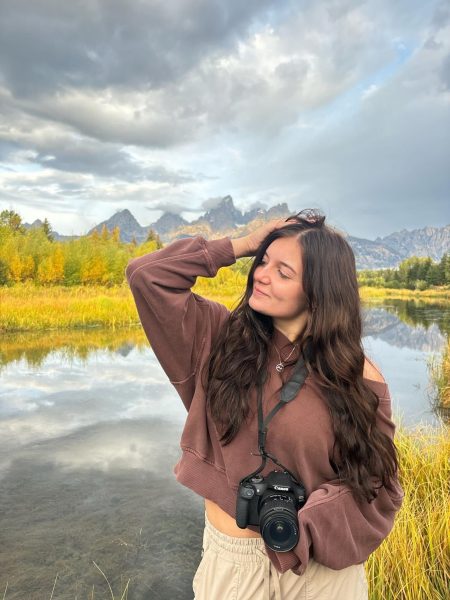


Finals, work and assignments can add up all too quickly and cause a lot of stress. One of the best ways you can take a moment for yourself is to immerse yourself in the outdoors.
While it’s nice to go to the Wasatch with friends or a group, sometimes it’s good to go out there alone. Going alone can help you see things differently. Your mind can focus on all the surrounding sounds: birds chirping, the rush of a nearby river or creek, or maybe you notice the small rodents running up the trees.
If done right, going solo could be your new favorite way to explore the Wasatch. It can be as simple as parking your car on the side of the road and reading a book or going on a backpacking trip alone.
The Bliss of Being Alone
Spending time in the mountains can help us realize how small we actually are. It’s humbling, but in a good way. If you pay close attention, you can see how the world is connected and how everything relies on everything else. It can help you take a break and slow your train of thought.
Ben Perry, a sophomore student at the University of Utah studying linguistics and art history, enjoys hiking and camping solo.
“It’s a different experience, relaxing and more therapeutic. It kind of reminds me of walking your dogs, it’s like a similar thing where you are relaxed and can think,” Perry said.
That relaxed, peaceful feeling is common among those who spend time outside.
Psychological Benefits
According to an article by Mayo Clinic, nature can provide a variety of psychological benefits. Being exposed to nature can improve cognitive function, lower stress levels, boost creativity and fix sleep patterns. Research has shown that prolonged exposure to nature can be a coping mechanism for those struggling with depression, anxiety and PTSD. In general, spending time outside can regulate your emotions, especially negative emotions such as anger and loneliness. Fully immersing ourselves in nature is not only an escape, but it can also heal us.
Safety
Confidence can easily turn into a consequence. Make sure you understand your limits and make wise decisions when you are out on your own. Understand the difficulty, whether you’re hiking, skiing, camping and so on alone. Always have a plan and let someone know your plan. This could be as simple as texting someone where you are going.
Adam Giordano is a senior studying accounting and finance. He relies on his girlfriend as his emergency contact when hiking solo.
“I’d always ask my girlfriend if she can be the safety contact. If I didn’t text her in 2 or 3 hours, because she knows how long it takes, there would be concern,” Giordano said. Perry, on the other hand, doesn’t feel the need to text anyone when he goes hiking.
“I have my phone, which has satellite texting, so when I am out of service, I can still contact people,” Perry said.
Satellite messaging is a great tool. Check whether your cellular device supports satellite messaging, and if so, understand how to use it. This feature allows you to contact emergency services, message people and share your location even without service. Regardless of this feature, it is still a good idea to share your plans with people before you go.
Be aware of your surroundings. When you are out in the Wasatch often, you are bound to run into wildlife at some point, and especially if you are alone, you need to be alert.
“In terms of actual trail safety, I should probably step that up. I don’t have any bear spray or anything like that. Kind of just hoping I can outrun anything I run into,” Giordano said. While Giordano may not carry any defense on the trails, he at least knows what to do when encountering wildlife.
“My buddy and I ran into a moose on the Doughnut Falls trail. The key point there is just to understand how to interact with the wildlife if it happens. If we had started yelling and getting close to take a picture, we would have been charged, but instead we made ourselves small and sat by a rock and let it do its thing,” Giordano said.
Deer, moose, bears, coyotes and rattlesnakes can all be found throughout the Wasatch. Be aware and safe. Additionally, know how much food and water you will need to sustain yourself, pack accordingly for the weather, and always bring a first aid kit.
Fighting the Stigma
Often, people feel that doing things alone is embarrassing or that alone time is negative. However, being alone comfortably can be very beneficial; you can get in touch with yourself more. So, how do you start doing things alone comfortably? According to Time Magazine, there are simple steps you can take to improve your mindset on being alone.
- The first step is to start out slow. In the context of outdoor recreation, this might mean going on a short, familiar hike instead of trying to summit a peak on your first outing alone.
- Do research beforehand. The web could introduce you to “starter” solo recreation activities that you may be interested in and comfortable trying.
- Bring something with you; this can serve as a distraction. Bringing a book to read, a journal to write in, or a camera to take pictures can help you stay in the moment and avoid overthinking.
- Find moments of connection. In the outdoor recreation context, this could mean greeting people on the trail when hiking or talking to people on a lift when skiing. If there aren’t people near you, make connections with nature. What do you see, hear or smell?
- Remember that being alone doesn’t necessarily mean you are lonely. Our minds oftentimes trick us into thinking other people care a lot more about us than they actually do. In reality, most people won’t even notice or care that you are alone. Some people may even find those who engage in solo recreational activities admirable. It shows you’re comfortable and confident in your own skin.
Everyone has to start somewhere, and over time, confidence will grow.
“Honestly, I started because I didn’t have people to go with in the middle of the day [my] freshman and sophomore years. Then I realized it was really fun, and a form of meditation in a way. If you don’t have music and you don’t talk to anybody, [then] it’s just the birds and the leaves in the trees, just by yourself is a lot of introspective time,” Giordano said.