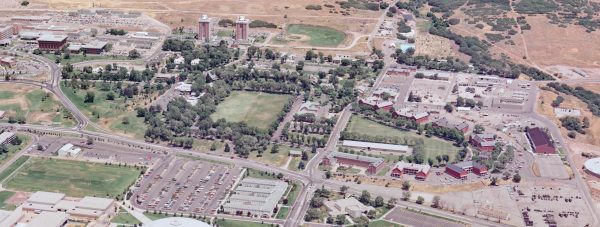

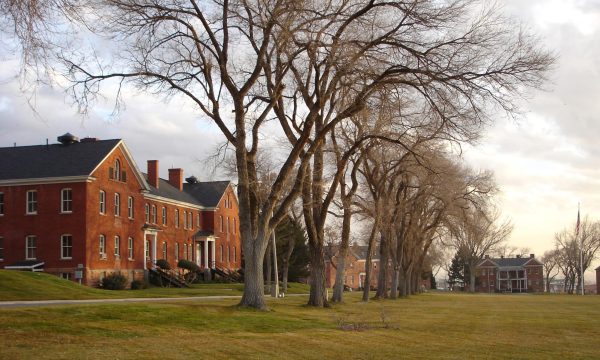
 As a bright-eyed University of Utah freshman, I lived in the farthest dorm building from the main hubs of campus. Two to three times a day for a year — in rain, sun and snow — I would walk the same trail through Stilwell Field and across Legacy Bridge. Many others did the same, and our treks wore a diagonal line through the field, the path so worn that the grass refused to continue growing there. At the time, I didn’t realize just how well land holds history. I was beginning my archaeology degree; I would attend lectures on the ancient Fremont people of Utah and then walk home to watch shows of soldiers turned anti-heroes, like The Punisher and The Winter Soldier. Fifty years earlier, my grandfather walked the same path across Stilwell Field, while it still served as military parade grounds for Fort Douglas. Half a century apart, we left our footprints — marks that have mingled with thousands of years of history.
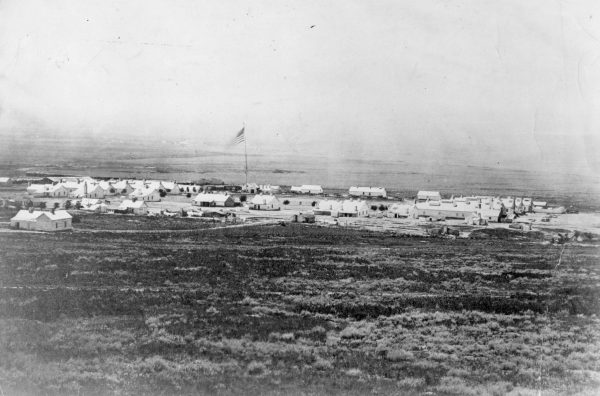
Nestled beside the University of Utah, Fort Douglas is located on the traditional and ancestral homelands of the Shoshone, Paiute, Goshute and Ute tribes. The Salt Lake Valley itself has been a tribal crossroads and hub of Utah biodiversity thanks to the Great Salt Lake and its tributary rivers. Here, animals and people have made a home for centuries. For millennia. It’s no surprise that LDS pioneers and the U.S. military alike deemed it “the place.” Originally known as Camp Douglas, the military base was established in 1862 to defend the country’s overland mail route and keep an eye on the “Mormons.” Later, during World War I and II, the fort was used to house German prisoners of war. By 1968, Fort Douglas still occupied many historic buildings and the parade grounds, and it held water rights in Red Butte Canyon. It also continued to serve as the headquarters for the 96th Army Reserve Command. That year, as the U.S. was in the thick of the Vietnam War, my grandfather enlisted to join the Army Reserves at the age of 18.
All this military history is on display at the Fort Douglas Military Museum on campus. In fact, at the 2024 Founders Day celebration, the museum hosted an archaeological tour in Stilwell Field featuring a mini-excavation and displays of previous excavations. There were buttons and clasps dating back to the Civil War era — small, dust-caked treasures that had lain in the dirt for 150 years. These were hints at decades of stories hiding under my footsteps. And the same stories were hiding under my grandpa’s feet in 1968.
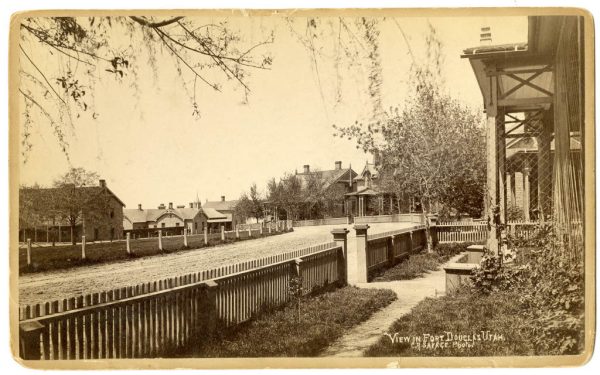 Approaching his 19th birthday, my grandfather desperately wanted to serve as a missionary for the Church of Jesus Christ of Latter-Day Saints. During that time, the LDS church limited the number of proselytizing missionaries able to leave and share their teachings, primarily to avoid the perception of the LDS church as an organization aiding people to dodge the draft. However, if a young man enlisted and completed his baseline draft duties (generally basic training), he could be eligible to serve as an additional proselytizing missionary. So, my grandpa enlisted.
The structures and politics of the armed forces have shifted somewhat in the decades since my grandpa joined, but the Army Reserve is essentially a duplicate of the Army, though not nearly as big. The reserves are the army’s backup, which in 1968 required my grandpa to go through the same training as the main forces. My grandfather was at Fort Douglas for a few weeks before being sent to Fort Gordon in Georgia for basic training. Then, after his mission in England, he returned to Douglas and trained twice a month while attending the University of Utah, preparing for law school and eventually meeting my grandmother. When he was there, my future dorm buildings — built for the 2002 Olympic Village — were still 40 years away. But my grandpa became familiar with the historic buildings of Officer’s Circle and the Fort Douglas Post Theatre, which now sits next to a National Guard Recruiting Office and Sage Point Building 810. This was the backdrop for my grandfather’s Army Reserve drills — dismounted drills, though they could’ve just been called marches, as horses hadn’t been mounted in battle since World War I.
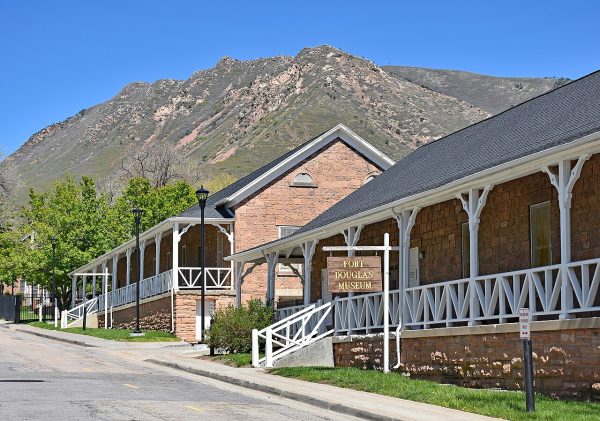
My grandfather marched where so many had marched and ridden before him, on those military parade grounds of Stilwell Field. That path was a launching pad for many other adventures. He worked as an army lineman and once fell from a pole and smacked his chest against a large sign, nearly skewering himself in the process. He worked as a legal clerk in Indianapolis for a “full bird” colonel, which helped him pay for law school. He worked under one of the few other LDS officers — a trainer who was kind but brutal — and would often mess with other young men who had heard that Mormons had horns.
In our current moment of history, like so many before, everyone has an opinion on the affairs around us and the affairs that brought us here. But no matter what you think of the events that came before, that doesn’t change the history that happened. The good and the bad — all is history that we can listen to and learn from. Our world is a tapestry of stories, and our lands carry the marks of all of us. Indigenous camps, complicated and controversial army figures, the training of a young man doing it all for his faith, and the college girl who felt compelled to write about it. At some point, they all walked that diagonal path across Stilwell Field. Our stories layered one on top of the other, like dust settling on artifacts. And like a river … slowly cutting its way through a grassy path.
All photos included are from the Marriott Library Archives and are licensed to the public domain or have no known copyright.