

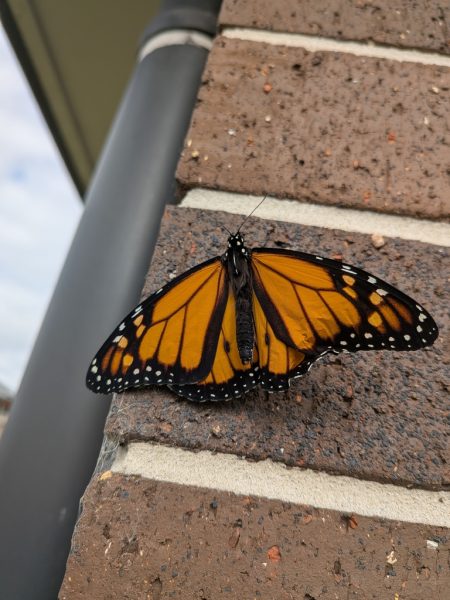
During the summer, Utahns have a chance to see a bold kaleidoscope of orange and black take over the sky. In May, as many as 200,000 monarch butterflies embark on a journey from California or Mexico to the northern United States. The prominent rest stop for their journey: Utah.
Monarchs are a resilient but delicate species. Monarchs and other butterflies are threatened by climate change, herbicides and other human activities. While in recent years their populations have increased to more optimistic numbers, they are still nowhere near where they used to be. The migration may be the answer.
Flight of the Monarchs
The monarch migration is a formidable 2,500-mile journey. Two groups of the same genus Danaus plexippus are divided by the Rocky Mountains. One group, called western monarchs, migrates to the California Coast while eastern monarchs migrate to the mountains of Mexico.
In the summer, monarch butterflies search for breeding habitats. Milkweed, sources of nectar and water are all healthy places for monarchs to breed. This brings the butterflies north and northeast across the U.S. This journey can contain up to five generations of monarchs. Utah receives the first generation in May. Monarchs lay their eggs and 30 days later they hatch. This new generation then stays, breeds and lays news eggs for around a month. Depending on the weather the next generations will do the same. During late August and early September, as the cold slowly drops in, the new generations emerging from their chrysalises are the ones responsible for the monarch migration.
In order to stay warm for the winter, monarchs must travel 2,500 miles or more to find a warmer climate. Living on nothing but their body fat and bits of nectar from plants along the way, the flight of the monarchs is a true test of nature’s power and instinct.
The Migrating Instinct
These monarchs have never done this journey before. And yet as soon as the temperature plummets, they all find their way to their generational homeland, Mexico and California. What also makes this generation stand out is while summer monarchs live only three to five weeks, the migrating generation lives seven to nine months! This natural instinct continues into March, when the aging monarchs sense it’s time to breed and they begin the rest of the migration back to the inland U.S. After the new generation is born in May and June, the migrating generation ends its nearly 6,000-mile journey.
The Butterfly Effect

Scientists have been documenting these monarch generations for almost 50 years. During these early years of documentation, populations reached almost 10 million. However, in the 1980s, they saw a significant decline in numbers because of the increased use of herbicides in farms and homes. In 2021, populations of monarchs reached a devastating 1,914. Monarchs are important for the ecosystem, which is why their endangerment is tragically concerning. From being top pollinators and an important part of a natural food chain, their disappearance would be devastating. Climate change and habitat loss is a major cause of these declining populations. However there is hope, and change has even begun.
Monarch monitoring groups have popped up everywhere. Resources such as Western Monarch Milkweed Mapper, Journey North and the Monarch Joint Venture are great for Utahns hoping to look for monarchs on their migratory path. By recording observations and sightings of monarchs during breeding season, over 200,000 monarchs have been reported since 2020.
This increase has stumped scientists. Some propose that during Covid, fewer crops were being planted, which caused less herbicides to be used. Planting milkweed, the primary breeding spot for monarchs, has also proven to increase populations. If habitats in breeding areas such as Utah can be saved and improved, it may be the answer for saving and repopulating the beautiful monarch populations.
“They have one of the longest migrations in the world, especially of an insect that weighs so little, like less than a gram,” says Laura Lukens, the program coordinator for the Monarch Joint Venture. “I think the migratory phenomenon is really amazing and that’s really what we’re worried about losing.”