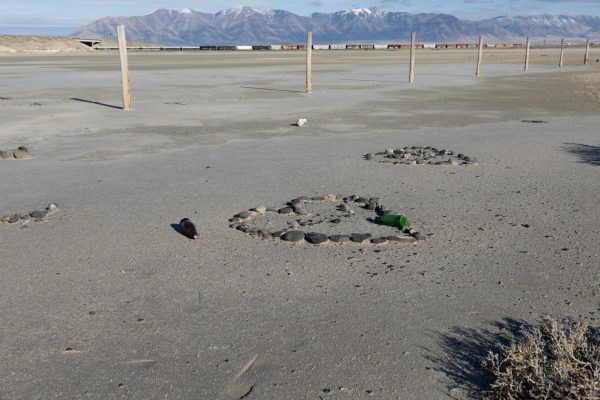

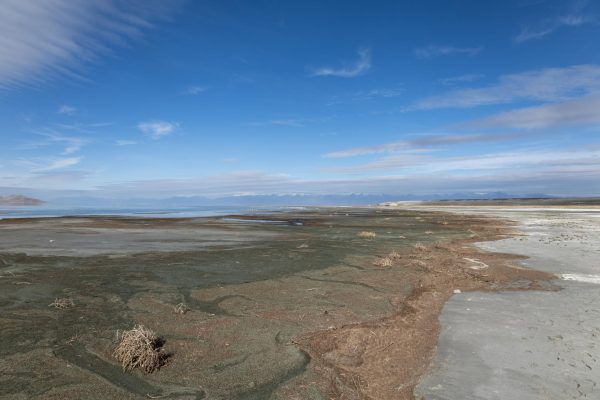
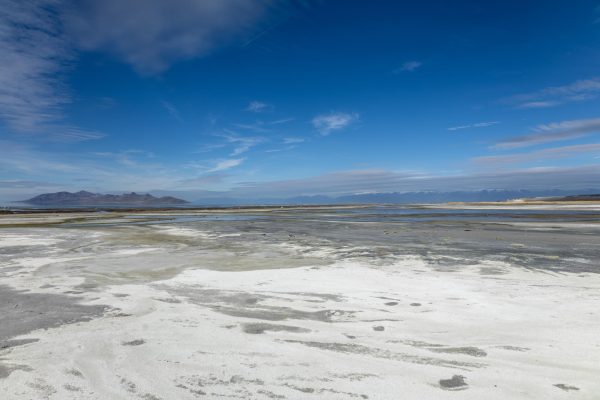
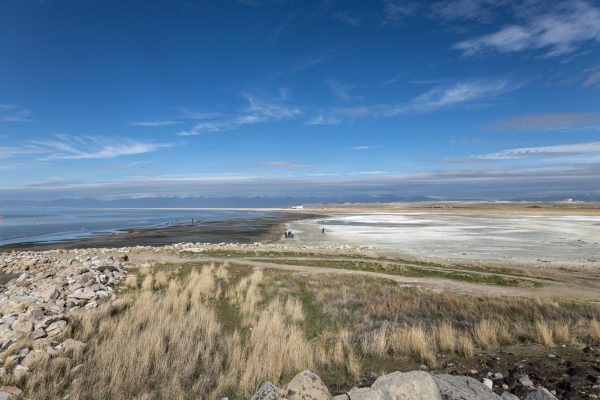
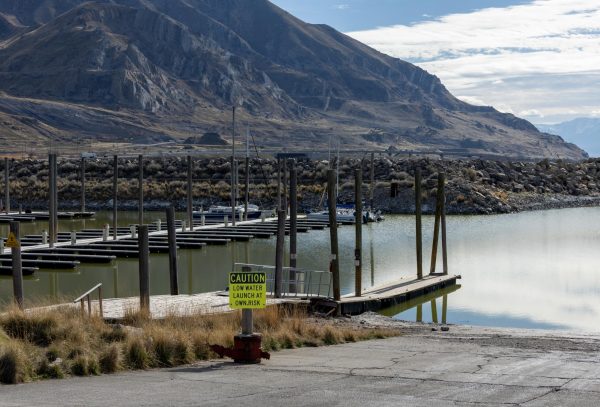
 The longer we put it off, the bigger the problem is going to get. The Great Salt Lake is drying up, and Utah’s air quality continues to rank worse than that of other states. These are problems you have most likely heard before, and they correlate more than you might think. According to an NPR article, “As the Great Salt Lake dries up, it’s also emitting millions of tons of CO2,” by Kirk Siegler and Juliana Kim, explains that the Great Salt Lake is becoming a significant contributor to greenhouse gas emissions.
This past legislative session, the state of the Great Salt Lake was a big topic. According to KUER, Utah’s largest NPR affiliate, a variety of water bills were passed this past legislative session. These bills include SB46 and SB296. SB46 requires state agencies to turn off their sprinklers after it rains, and SB296 adds to the Great Salt Lake conservation plan. These bills could be small steps towards helping the Great Salt Lake.
How organizations are trying to help
With the rapid decline of water in the Great Salt Lake and many other environmental factors continuing to impact Utah, a variety of organizations have begun to come together to address the problem.
The Great Salt Lake Collaborative is an organization focused on engaging and informing the Utah population about the “crisis of the Great Salt Lake.” The collaborative is a group of news, education, and media organizations. They released articles about how lawmakers’ decisions affect the Great Salt Lake, as well as updates on water levels throughout Utah.
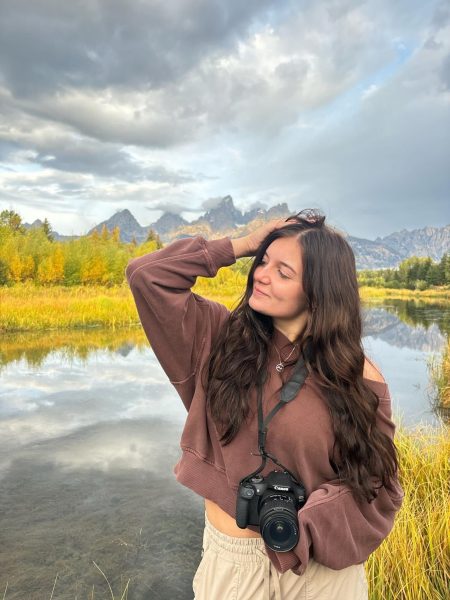
Another organization that focuses more on the overall health of Utah is HEAL Utah. HEAL Utah focuses on three main environmental issues: air quality, clean energy, toxic and radioactive waste. The organization also has concerns about the Great Salt Lake, as its drying could have detrimental effects on our state’s air quality. The organization is a non-profit that was founded 25 years ago. I spoke with Katie Balakir, one of two senior policy associates at HEAL Utah.
“We made community really the center of everything that we do; we’re an environmental justice organization, which makes us a little bit different than a lot of other organizations… We put an emphasis on the importance of including communities that historically haven’t been included in policy decisions.” Balakir said. The organization spends much of its time educating Utahns about air quality and renewable energy. This past legislative session, they also spent some time at the capital. The organization is non-partisan and works with both communities and lawmakers.
One of HEAL Utah’s past successes includes working with the state of Utah, the Department of Transportation, the Division of Air Quality, and the legislature to get funding for the “zero fares for clean air program.” This offers free public transit on some of Utah’s worst air quality days to encourage its use.
How YOU can help
While these organizations are making effective efforts to protect the Utah environment, they still need our help. I asked Balakir what she recommends college students, but really anyone can do, to help.
“I think the biggest one is taking advantage of the transit opportunities you have. There’s a really great transportation system at the university, and that’s not something you’ll always get. Whenever you can walk somewhere instead of driving or take the bus or Trax somewhere instead of driving, that makes a really big difference if many people are doing that.” Balakir said.
If you are a University of Utah student, you get UTA for free. Take advantage of it!
Your Vote Matters
Our role in the community and voting also has a big impact on our environment.
“Another thing I would recommend people do is reach out and find who their legislators are. We have a page on our website (healutah.org) that brings you to a place you can type in your address and figure out who your state representative and senator are. You can also find that on the state legislative website. Send them a quick email just introducing yourself, and say, ‘these are the issues that I care about as a student,’ and ‘these are some of my concerns with the environment.’ That’s more than enough. Our legislators don’t really hear from people in their communities as much as we would like them to,” Balakir said.
Informing our representatives about our concerns as citizens can have a big impact on our communities. Our votes and involvement can create lasting changes and could be the step we need to save our environment. Policies and laws are the actions we need for positive change. Vote with the climate in mind.
Changing habits
Small daily habit changes can also help improve our environment. As stated before, use public transit more and/or carpool. Ride bikes or walk places if you can. Reduce your plastic use and bring reusable bags to the grocery store. Use less water, take shorter showers, and don’t overwater your lawns. If it’s raining, turn off your sprinklers. Reduce food waste and compost food. These habits may be small, but if everyone did them, it could make a big difference.
“We have a lot of really unique challenges right now. I think the biggest thing on my mind is the Great Salt Lake because that hits a number of different issues. It hits its water; it hits air quality. If the lake continues on its current trajectory and dries up, that poses such a huge risk to us living in the Salt Lake Valley because we’re breathing in that dust. We’re still trying to figure out what exactly is in the dust that we’re breathing; that thought alone is really scary. It’s also a really expensive problem to fix. If we let it get to that point, we’re talking billions of dollars to fix the lake.” Balakir said.
We all want our communities to stay clean and beautiful. It’s more important now than ever to stand up and use your voice to save the Great Salt Lake and improve our state’s air quality. Make changes now before the problem gets worse.