
Snowshoes were once a necessary means of travel through deep snow for fur trappers but have now become a popular winter recreational activity. Waddling along the trail while the sun makes the snow glimmer, the brisk air numbs the tip of your nose, and the stillness and calm of winter surround you.
Tips to Start Snowshoeing
 I’ll be honest, when I think of winter activities, snowshoeing isn’t the first thing that comes to mind. Regardless, it’s worth trying.
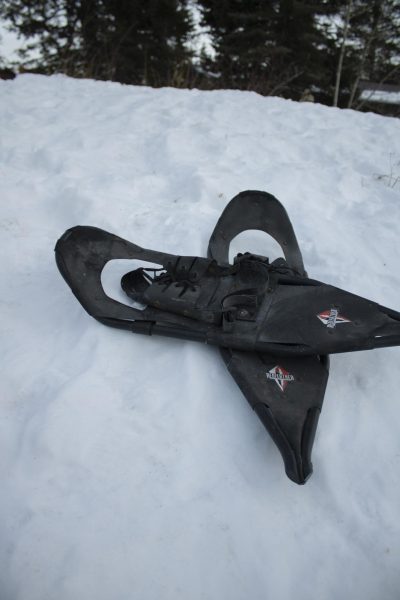
According to REI, snowshoeing is an easy way to get exercise, and it’s a fun adventure for all ages and skill levels. Snowshoeing itself is inexpensive compared to other winter sports like skiing, snowboarding and snowmobiling. The only required gear is a good-fitting pair of snowshoes and warm attire. Poles are recommended but not required. And for any recreational activity, bring the 10 Essentials (water, food, first-aid supplies, etc.).
Proper snowshoes can make a big difference. It’s important to get snowshoes that fit your weight. You should pair your snowshoes with a good, waterproof pair of boots and thick, warm socks. Snowshoes can be adjusted to fit almost any kind of boot or shoe.
A basic technique for snowshoeing, according to REI, is to keep your stride wider than you normally do when hiking or walking. If you are in powder snow, use the kick-step technique. This is almost exactly how it sounds: pick up your foot and kick into the snow toe first. If you are on packed snow, you can rely on your snowshoes’ traction and should avoid kicking steps.
Good places to snowshoe include hiking trails and cross-country ski areas. Snowshoe tours are a good way to learn and stay safe.
Learning One Step at a Time
The first time I went snowshoeing was in fourth grade on a school field trip. I remember riding the school bus up Big Cottonwood Canyon to Spruces Campground with the entire fourth grade. My teacher Mrs. Athay had to shush us repeatedly because we were all excited to play in the snow. After putting on our snowshoes, we followed our tour guide through the spruce trees. This field trip would stick with me forever.
The school I attended still runs this field trip for its fourth graders each year. My mother, Alicia Riddle, is a teacher at the elementary school I attended. She went on this field trip with her fourth graders four times. The snowshoeing field trip was one of her favorite experiences with her students.
“I think it’s good for them to go out and see nature because a lot of the time we talk about it, and many of the kids don’t have the resources to actually do it. We can’t do that [snowshoeing] in a classroom, so this is the best education they can get, and it ties into what they are learning,” Riddle said.
In the fourth grade, students learn about weather, climate, habitats, canyons formation and how ecosystems interact. Riddle appreciated the field trip for her students because it provided a hands-on learning experience.
“I’m not very outdoorsy, but watching the children learn a lot more because of the hands-on education makes me actually enjoy it. Kids start to realize that the weather affects the quality of water, the animals and the plants. They understand the interconnectedness for the first time,” Riddle said.
The field trip is through the Cottonwood Canyons Foundation. They offer student field trips as well as public snowshoeing tours.
On student field trips, the tour guides challenge the students to act like animals they see on the trails. Riddle enjoyed witnessing her students act like a “snowshoe hare.” Students would hop around in the snow with their snowshoes on, and the tour guides would line them up to race.
Giving Snowshoeing Another Try
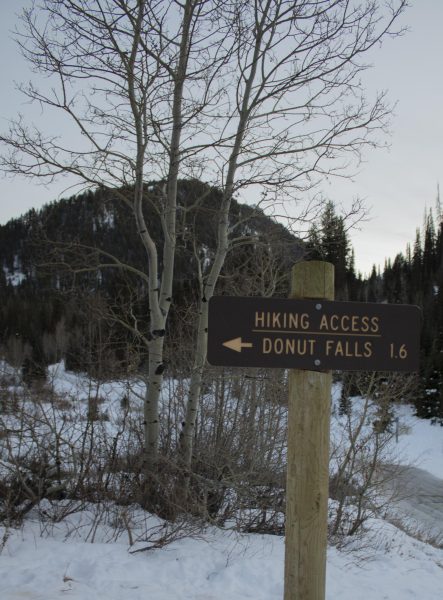 I decided to give snowshoeing another try, 10 years later. While I wasn’t jumping around like a “snowshoe hare,” I did feel like a penguin. I stole my dad’s snowshoes, which had been collecting dust on a shelf in his garage, and I went up Big Cottonwood Canyon with my friend Jasper Stevenson. We decided to hike the Doughnut Falls Trail. My dad’s snowshoes were a little too big for me, but I made them work, and Jasper followed in his snow boots. I have never felt more goofy in my life. I kept tripping over myself and struggled to get used to the snowshoes strapped to my boots. However, when I was able to find a good patch of snow, it was fun to walk through it; I felt like I was floating a little bit.
There are definitely things I would’ve done differently; for example, I wouldn’t have gone as late in the day. Jasper and I ran out of daylight, so a majority of the hike was in the dark. Additionally, I would like to try again on a trail that isn’t as icy. I found that when there was more “fluffy” snow, I could walk more easily and was less likely to trip in my snowshoes. I also think the snowshoes were a little too big for me, so a better fit would have made my experience better. I didn’t bring poles on this hike, but I believe they would’ve helped, and I’ll bring some the next time I try snowshoeing.
Stevenson would sum up the experience as icy, dark and cold, but it was still worth it to see the stars when it got dark.
“There’s nothing like hiking while your friend trips over her snowshoes on the worst snowshoeing conditions possible,” Stevenson said.
The current snow conditions definitely played a huge role in the experience. If you’ve driven up the canyon or even stayed down in the valley, you’ve noticed how disappointing the snow is this year. It breaks my heart. Like most Utahns, I am praying that the snow eventually comes. If it snows again, I’ll grab snowshoes and try again.