
Back in July, H.R. 1 — more commonly known as the “One Big Beautiful Bill” — was signed into law by President Donald Trump. An analysis from PBS characterizes this bill as the “largest in terms of dollars, in terms of tax cuts and spending cuts in U.S. history.” The tax cuts and budgetary provisions within affect many different areas of government spending, including (but not limited to) health care, food assistance, agriculture and defense.
Among some of the more serious spending cuts were massive rescissions of renewable energy tax credits and spending. These rescissions were mirrored by increased provisions for the traditional energy sector, which includes coal, oil, and natural gas. These actions come from an administration that is adamantly and loudly anti-renewable energy, namely solar and wind energy. They further root us in fossil fuel dependence and confirm the Trump Administration’s position on environmentalism, energy and climate change.
I hope to shed some light on what these actions mean for the transition to clean energy — first what they actually are, then what they mean for Utah. Then, I hope to take a step back and consider what this could mean for the environment as a whole.
What Does the Act Do?
The One Big Beautiful Bill Act rescinds many of the tax credits that the Inflation Reduction Act (Joe Biden’s flagship piece of legislation) put into place. Below are some of the tax credits that will be affected by this act:
- Advanced Manufacturing Production Tax Credit: This provides a tax credit to manufacturers and sellers of certain products. Wind energy infrastructure components sold after 2027 will not receive these tax credits.
- Clean Energy Production and Investment Tax Credits for Wind and Solar Projects: These tax credits will phase out for all solar and wind energy generation facilities that are not placed in service by the end of 2027 (unless they begin production by July 4, 2026). Tax credits for residential solar will also be phased out.
- Clean Hydrogen Production Tax Credit: Clean hydrogen production projects that begin construction after 2027 will not receive tax credits.
- Electric vehicles and infrastructure credits: The Clean Vehicle credit was terminated on September 30, 2025. This credit allowed individuals who purchased electric vehicles to claim thousands of dollars in tax credits. Additionally, charging infrastructure for electric vehicles will end in 2026.
In addition to these tax credit cuts, the One Big Beautiful Bill Act rescinds any unspent funds from a number of environmental funding programs. This includes programs like the Greenhouse Gas Reduction Fund and Environmental and Climate Justice Program, which provided funding and grants to local communities and non-profits for addressing environmental, climate and equity issues. Cuts to the Greenhouse Gas Reduction Fund impacted the National Clean Investment Fund, Clean Communities Investment Accelerator and Solar for All — all programs that aimed to increase financial support for and development of clean, renewable energy facilities, especially in underserved communities.
Other loan programs that de-risked clean energy development were also slashed. The Energy Infrastructure Reinvestment Financing Program, Tribal Energy Loan Guarantee Program, and Transmission Facility Financing Program were all cancelled. Collectively, these programs accounted for hundreds of billions of dollars going towards renewable energy development.
These dampers on the renewable energy sector are mirrored by increased provisions for the fossil fuel industry. For example, the act decreases royalty rates on oil and gas leases, as well as coal lease. This means drilling and mining companies will distribute less of their profits to the landowner they are leasing from, whether that be an individual or the state or federal government. It also mandates the Secretary of the Interior to perform a minimum of four oil and gas lease sales every year, spread out across a number of western states including Utah and at least 30 sales over the next 15 years.
Restrictions on oil and gas leasing in the Arctic National Wildlife Refuge and National Petroleum Reserve in Alaska are removed in this act. Additionally, it provides the Department of Energy with $171 million to stockpile petroleum products and $28 million for petroleum storage facilities, as well as $1 billion for a loan program that will prioritize traditional energy and critical minerals. It also expedites the NEPA environmental review process.
RAH!!
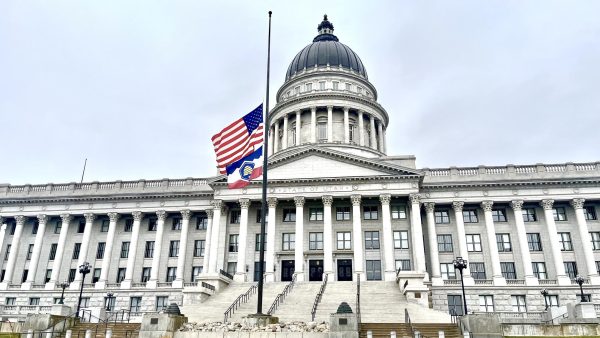
Sorry, that was just to make sure you were awake. I know the effects of federal policy may seem ethereal and nonexistent sometimes, so I understand if you are dozing off. But these actions will have serious impacts right here in Utah. I urge you to stay with me for a couple minutes more as I take a more personalized turn.
What this Means for Utah
In August, the effects that the One Big Beautiful Bill Act will have on Utah’s energy initiatives were discussed in two interim committees of the Utah legislature: the Public Utilities, Energy and Technology Interim Committee and the Natural Resources, Agriculture and Environment Interim Committee.
A lot of what can be expected to happen in Utah mirrors what I have explained above. The state has already set a trend of continuing to pour resources into traditional energy projects, as well as beginning to put effort toward developing nuclear energy infrastructure. We have solar and wind energy projects, but these areas of the energy sector are relatively low on the legislature’s list of priorities. This act will propagate this reality, meaning less renewable energy projects.
One example of this can be seen in the cuts to the Greenhouse Gas Reduction Fund, which funded the Solar for All grant. Utah expected to receive over $62 million from this grant for the installation of rooftop solar panels, primarily in low-income communities, across the state. Now that money has been rescinded.
The boosts in investment in traditional energy could also increase the number of these projects in the state. The One Big Beautiful Bill Act may widen the disparity between renewable energy projects and traditional energy projects in the states. This could further contribute to Utah’s air pollution problem.
Let’s Take a Step Back
Ultimately, this act sets the opposite precedent of the Inflation Reduction Act. It upholds the traditional energy sector while gutting government support for the renewable energy sector. This could have drastic consequences on the environment and climate, especially as we push further and further past the planet’s boundary for carbon dioxide loading and climate change.
A study from Princeton University suggests that the passage of the One Big Beautiful Bill Act will result in an increase in greenhouse gas emissions of nearly 190 million metric tons per year in 2030 and 470 million tons in 2035. This positions us a long way away from the 40% reduction required to meet the emissions requirements under the Paris Agreement. While the U.S.A. is no longer a part of this agreement, it is still a good landmark for what we should strive for.
This comes during a time of vast environmental deregulation from new EPA leadership. Already, 70 coal-fired power plants have been given a two-year exemption from federal requirements regarding reductions of toxic chemical emissions. The endangerment finding — the 2009 finding that lists greenhouse gasses as public health threats and acts as the government’s legal authority to act on climate change — was repealed. The EPA rolled back limits on forever chemicals in drinking water.
During times like this, it is easy to lose hope. I, for one, have struggled with this immensely as environmental issues have slowly begun to demand more and more of my brain’s real estate. But I find solace in the fact that for every setback we face in clean energy or environmental protection, a fire is lit under a number of us to stand up and take action.
I think this is a part of why there are so many environmental advocacy groups in Utah. Utah Clean Energy, HEAL Utah, Utah Rivers Council, Stewardship Utah, the Utah Chapter of the Sierra Club. These are just a few of the organizations that are leading the fight for a more sustainable future in this beautiful state.
And we can get involved, too. We can volunteer with these groups, we can educate our neighbors, we can lobby our legislators. When the federal government attacks environmental provisions, we can engage at the local level where our efforts are more impactful. We can demand the future that we know is possible. After all, a hundred voices are louder than one.
Here is a link to the One Big Beautiful Bill Act if you dare to read it yourself (be warned, it’s pretty dense): https://www.congress.gov/119/plaws/publ21/PLAW-119publ21.pdf