

How many kinds of trees can you name off the top of your head? Probably a lot if you really sat down and had a good think. Why is that? I’m sure you can’t name nearly as many grasses or ferns or bushes. There is something about trees that has cemented themselves in our brains with no sign of wearing away. For one, they’re huge and hard to miss. Even the average small tree is a towering 25 feet tall, with common species like oaks and maples reaching 70 feet. Giants, like redwoods, commonly shoot past 300 feet. Trees are often the most prominent plant in a landscape.
 We make a lot of memories with trees. As kids, we climb up them and (not knowing better) carve our names into their bark. Some of us may have swings that hang from their branches. As we grow older, we read or work in the shade of their leaves, finding comfort in the cold they bring to a hot day. We become fascinated with their inner workings, how deeply their roots spread, how they transport water and nutrients up their trunks and throughout their branches. We find beauty in their form, planting them in gardens and cities alike.
But there is also something mystical about them. Something that we can’t quite explain but was known to many ancient civilizations, surviving today in the traditions and knowledge of Indigenous tribes across the globe. This supernatural characteristic has been explored in the mythologies of numerous civilizations, each deifying trees in slightly different ways but with the same core tenet: trees are givers of life and wisdom. These myths are often written off as just that, myths, but modern research has shown us that truth lies within them. What has been viewed as fiction and “hocus pocus” may actually allude to a deeper understanding of trees that modern science is just beginning to uncover.
Trees in Mythology
In many religions and mythologies there is a “tree of life” that is said to grant some form of spiritual or eternal life. One of the earliest examples of this is in Mesopotamian mythology. It is believed that Gilgamesh came upon the Tree of Life in his search for immortality, and a similar symbol was found in much Assyrian iconography.
In Ancient Egyptian mythology, the acacia tree was a sort of tree of life due to its healing properties. It was said that all Egyptian gods and goddesses were born under the Acacia tree of Iusaaset, the oldest acacia tree. The Ished Tree of Life (a kind of avocado tree) was also prominent in Ancient Egyptian mythology, bearing fruit that granted eternal life. In Christian and Jewish tradition, one of the trees in the Garden of Eden provides immortality and proximity to their god.
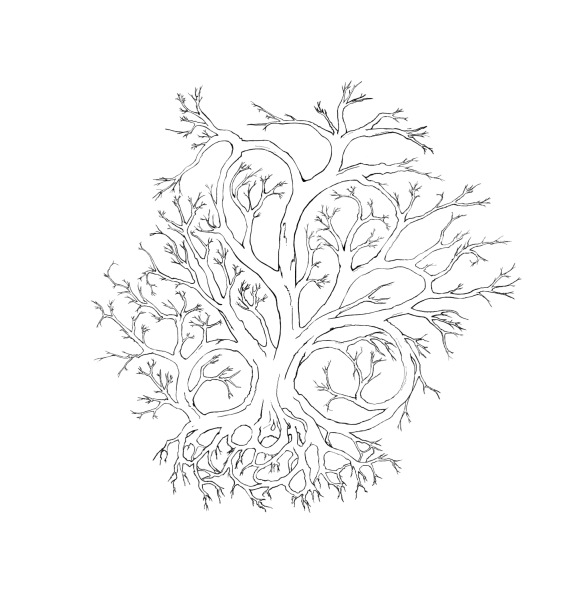
Other cultures spoke of a tree closely related to the tree of life: the World Tree. This tree served as an axis mundi, or center of the universe, that connects the heavens, the Earth and the underworld. Perhaps the most prominent of these world trees is Yggdrasil in Norse mythology. This colossal ash tree connects the nine Nordic realms and was said to be the source of new life after Ragnarok — the final, apocalyptic battle of the Norse gods.
In Mayan mythology, the gods planted four Yaxche (Ceiba trees) in four corners of the world to hold up the heavens. A fifth Yaxche — the world tree — was planted in the center whose roots could reach Xibalba — the underworld — and its branches the heavens. It served as a path for souls to reach both the underworld and the heavens, as well as for the gods to reach Earth. Ashvattha, in Hinduism, represents the interconnectedness of the universe. It is a sacred fig tree situated with its roots above, snaking through the stars, and its branches below.
Besides having a “tree of life” or “world tree,” other cultures held special reverence for certain kinds of trees. The Ashvattha tree is a specific kind of fig tree that actually exists, Ficus religiosa. It is under this same kind of tree that Siddhartha Gautama, the Buddha, is said to have attained enlightenment. A descendant of this exact tree — the Bodhi Tree as it has become named — grows in Mahabodhi Temple in Bodh Gaya in Bihar, India. Trees, especially oak trees, were also revered in Celtic tradition. Druids worshipped in groves of trees, and trees play a prominent role in their mythology.
These are just a handful of examples of how trees have been mythologized throughout history; there are many more. Much of tree mythos is connected, either by theme or influence. These ideas, that trees are the steadfast foundation of life, are transcultural, moving beyond the musings of any individual society. From Mesopotamia to the modern day, we have believed that trees hold something more, something deeper than they initially reveal.
Fact Behind Fiction
As it turns out, the idea of trees being a source of eternal life is not so far from the truth. Researchers have found that trees and other plants emit something called volatile organic compounds (VOCs). VOCs are organic compounds that exist as gases at or above room temperature. They are often associated with human-made chemicals from paint thinner, pesticides, cleaning supplies and other chemical-based products, causing adverse health effects.
VOCs emitted by plants — biogenic VOCs — on the other hand, have been found to positively impact human health. Inhalation of these compounds has been found to benefit our immune, nervous and endocrine systems. They have antioxidant and anti-inflammatory effects and may also promote brain function and mood while decreasing mental fatigue. These benefits come not only from the VOCs trees emit, but also from the sensory stimulation of being in a forest.
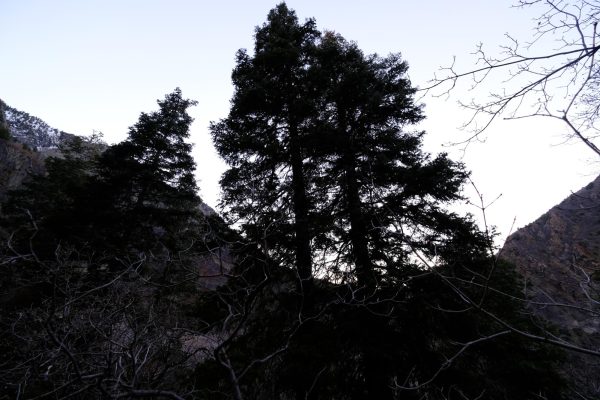
In Japan, there is a practice called shinrin-yoku, also called a forest bath. It involves immersing oneself in an outdoor space, usually a forest, for a period of time. It enlists the use of all of the five senses, and does not necessarily require exercise. This leisurely practice has been shown to have immune-boosting, stress relieving effects, likely thanks to the inhalation of biogenic VOCs and sensory stimulation. While trees may not grant eternal life, they do grant important health benefits, potentially leading to some form of longevity. It is important to note, though, that these studies highlight the need for more evidence and not all science is irrefutable fact.
And while trees may not hold up the universe or connect Earth to the realms of heaven and hell, they play pivotal roles in every environment they are a part of. Trees are important for storing carbon, cooling the area around them through evapotranspiration and providing food and habitat. The Amazon rainforest alone holds nearly 123 billion tons of carbon and is one of the most important carbon reserves on Earth. By providing food and habitat for wildlife, they increase biodiversity and are a foundational agent of environmental health.
Trees are also a source of wisdom, like mythology says. Tree rings tell us a lot about climate history. Based on the width of a tree’s ring, scientists are able to determine particularly wet years or droughts. In cooler regions, rings can even give hints into a year’s temperature. Trees can give a climate history dating back more than 1,000 years, and they can help us evaluate human-caused climate impacts by giving us a baseline to work with. Besides climate, archeologists are able to use ring patterns in the wood used in buildings to determine general construction dates, such as in the cliff dwellings in Mesa Verde National Park. A single tree tells us stories of years long past.
Trees are also able to communicate, something believed by many Indigenous groups long before being discovered by scientists. Through subterranean mycorrhizal networks connecting the roots of many plants, trees are able to send “infochemicals” to one another, trading warnings and nutrients, and even identifying kin. This alludes to a kind of “forest intelligence,” as Matthew Adams puts it in his paper “Indigenizing the Anthropocene? Specifying and situating multi-species encounters.” With this ability, it is no wonder trees have been so mythologized as caretakers and wisdom-givers.
Fact as Fiction
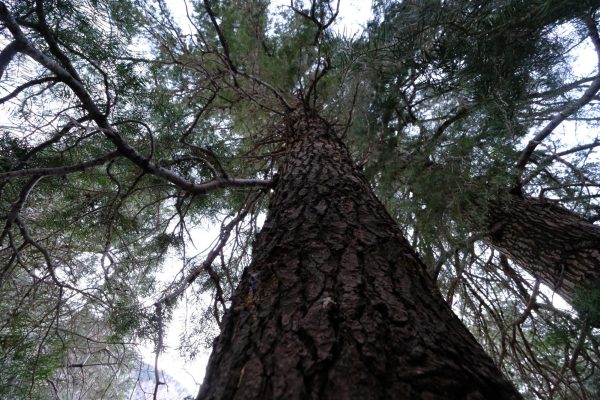
In his paper “Agency at the Time of the Anthropocene,” French philosopher and anthropologist Bruno Latour describes science as a series of animations and subsequent deanimations. We put more emphasis on the act of deanimation, reducing natural events to logic and causal occurrences, but Latour repositions the act of animation, the storytelling and mythologizing that we do, as the essential aspect. The first steps of the scientific method are observation and hypothesis; an event is witnessed and a potential explanation is proposed. A hypothesis is, itself, a kind of fiction; it’s a guess as to what may be, or could be.
Latour gives the example of Sir Isaac Newton’s foray into angelology to explain his theory of gravitation. At the time, there was no other way to explain such a force besides angels. So, Newton started with angels, and, after hundreds of pages of angelology, deanimated his theory to an unseen force wholly separate from the acts of angels.
This slight diversion is all to say that the development of fact requires a kind of fiction. We have seen it with the study of trees, and we see it throughout scientific history. Time and again, someone goes against the grain with a proposal most write off as ludicrous — the laws of gravitation, evolution, heliocentrism — but it inspires new studies and eventually turns into fact (or as close to fact as one can get).
It’s easy to write off mythology as mere stories. But, as we’ve seen with trees, they might allude to secrets about the world around us that have not yet been explained by science. They can serve as a jumping-off point to uncover such secrets and better understand the planet we live on.
Trees are pretty cool. People have known this for far longer than modern science has existed. Go outside and give your favorite tree a hug. It might just hug you back.