
Bugs are all around us. From the ants crawling on a picnic blanket to the flies buzzing around a trash can, to the butterfly in the garden and the bee buzzing past an ear. Maybe you already knew that jumping spiders, under a centimeter in size, are the most intelligent of any arachnid and can recognize human faces. Or maybe you’re just learning that moths can use their wings to deter bats by disrupting their echolocation, and that in the Arctic, mosquitoes are responsible for a large majority of all pollination.
 Coming in all shapes and sizes, big and small, hairy and slimy, bugs have an incredible variety and skillset that fills every corner of every ecosystem in the world. They were here before us, will be here long after us, and while small, they play a huge role in the environment, especially right here in Utah. Whether you love bugs, don’t mind them or completely fear them, here are three places in Utah where bugs are being studied, shared and waiting to be discovered.
Community Protection is All the Buzz
The Salt Lake City Mosquito Abatement District (SLCMAD) is a special service district that provides surveillance and control of mosquitoes and mosquito-borne diseases, according to Ary Faraji, Ph.D., executive director of SLCMAD. Faraji says that Utah was the third state to pass legislation for mosquito abatement, and when laws were passed in 1923, and the SLCMAD became operational in 1924. Their facility, which Faraji says they moved into in 2019, includes much more than mosquitoes such as pollinator plants, a community garden, laboratories, dormitories, a helicopter hangar and a fish hatchery.
Faraji, also an adjunct professor at the University of Utah, says he got into the field for his love of entomology but didn’t know there was a field specifically for mosquito control. He found out about working with mosquitoes in college and realized he could love what he does and it didn’t have to feel like work. He grew up in California and began his master’s in entomology at Rutgers University, where he says mosquito control was founded. Faraji says that many people wonder why Utah has mosquitoes if it is such a hot and dry place. He says the answer lies in Utah’s famous snow melt and an antiquated water system that creates a constant flooding and drying effect that produces mosquitoes.
“When I was in New Jersey, if we set a trap out and we collected 5,000 mosquitoes, that was a lot of mosquitoes. Like, something had gone wrong, somebody didn’t do their job. It was just shocking to see those numbers. My first week here in Salt Lake in July of 2014, we collected 30,000 mosquitoes. In a single trap,” says Faraji.
Faraji says SLCMAD are global leaders when it comes to mosquito surveillance and control. He says he sits on PhD committees both locally and globally, helps drone pilots receive their certifications and that he and his team are working toward training the next generation of specialists. Faraji says they also innovate surveillance technology by creating their own traps, new products and new formulations, all while making sure methods are safe and not impacting non-target organisms.
“We’re making mosquito control safer, more economic and more efficacious at the end of the day for the residents that we serve in Salt Lake City,” says Faraji.
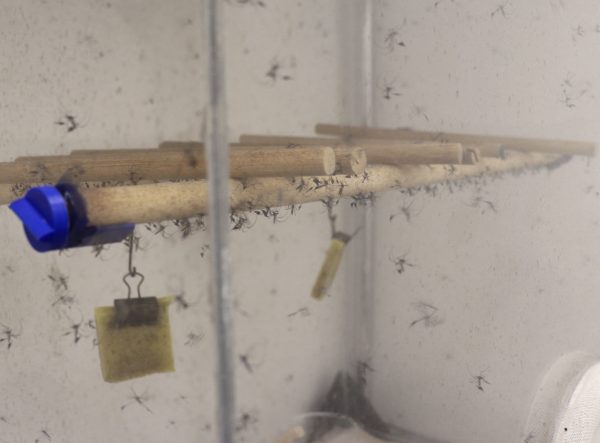
In order to understand mosquitoes, Faraji says SLCMAD starts by finding out where they are, how many there are and what species are present. He says they collect up to 3 million mosquitoes within a two-month period, with a team of 10 to 15 people dedicated to surveillance. Faraji says they run 40 3D-printed mosquito traps twice a week during active season. Because it would not be possible to speciate every mosquito, he says they have developed software that can identify species from a sample. Faraji says a small vial is then taken to their molecular laboratory where they can amplify RNA and DNA to test for three pathogens routinely found in the Salt Lake Valley.
He says these are arthropod-borne viruses such as West Nile virus and Western Equine Encephalitis. Faraji also points out that using the same insecticide on pests repeatedly will eventually lead them to build up resistance, similar to how humans can build antibiotic resistance. He says using their own colony in comparison to mosquitoes from the field allows them to see if they need to rotate products or back off until resistance has worn off.
Faraji says their primary method for treating mosquitoes is larvicide, not spraying adult mosquitoes. He says they achieve this using BTI, a bacteria specific to mosquitoes that doesn’t harm any other beneficial insects. In addition, Faraji says their fish hatchery uses Gambusia fish to eat larvae naturally in enclosed pools. He says the SLCMAD is also currently working with a state prison to hatch the native, endangered least chub fish as a biological control alternative. For Faraji, the work goes beyond just mosquito control.
“This is part of the importance of having an actual entomologist run a mosquito control business … we want to make sure that we’re not killing all the bugs,” says Faraji. “We’re just suppressing the bad ones to tolerable levels.”
A Picture-Perfect Way to Face Fears
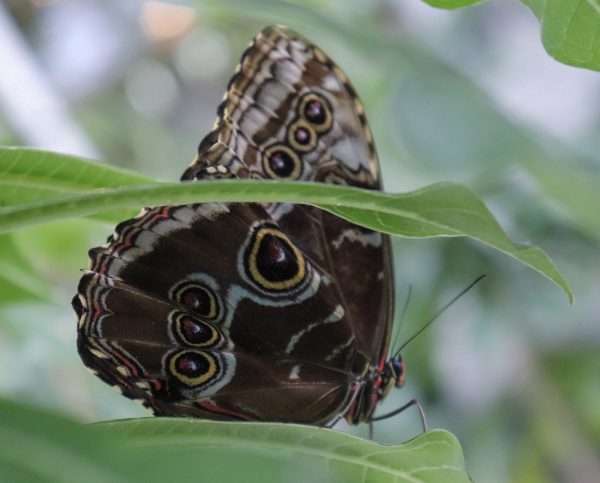
Located just south of the hustle and bustle of Salt Lake City is a more family-friendly introduction to bugs at Thanksgiving Point. From the snap of a photo, the Butterfly Biosphere is an incredible gateway bug according to Stephen Ashton and Marissa Harrison from Thanksgiving Point. The conservatory includes over 10,000 square feet of designated space designed to replicate a real rainforest, and there are opportunities for all ages to learn about and interact with insects.
 Stephen Ashton, Ph.D., Senior Director of Butterfly Biosphere and Curiosity Farms at Thanksgiving Point, comes from a family deeply rooted in the organization. His parents, Alan and Karen Ashton, are the founders of Thanksgiving Point. Before becoming director, Ashton says he began by studying exhibit design and assisting with the development and evaluation of the biosphere from the beginning. He says the biosphere was not originally part of the plan for Thanksgiving Point, but after being approached by for-profit butterfly experience organizations, they thought it could be a great addition to their nonprofit mission. He calls the biosphere’s addition “very successful” and says guests have really enjoyed the experience.
For Thanksgiving Point, their mission remains the same across all of their facilities: to “ignite curiosity and build confidence in children from all backgrounds through hands-on STEM experiences,” according to Ashton. Otherwise known as the three C’s: curiosity, confidence and compassion.
“We’re not only talking about bugs, which are super cool, but helping kids learn that process of what it means to be a scientist. What does it mean to exercise your curiosity, to ask questions, to observe,” says Ashton.
He notes a meaningful cycle of growth that has come from that mission and describes the biosphere as another powerful way to talk about science and STEM.
“A lot of new people that come to work here at Thanksgiving Point grew up coming here … they grew up with this kind of excitement, and now they get to come back and help push that forward. It’s just another way that we’re able to talk about science and STEM in really fascinating ways,” says Ashton.
Marissa Harrison, chief entomologist at the biosphere, says that working with butterflies gives her the opportunity and privilege to work with all kinds of bugs. Before coming to Thanksgiving Point, Harrison worked at Disney’s Animal Kingdom caring for their invertebrate collection and specifically moved from Florida to Utah just to help open the facility. She and Ashton describe butterflies as a great “gateway” bug since it is easier for people to get comfortable with.
“That was the only thing that could have gotten me to leave. There aren’t a lot of insectariums around the country. This was a really unique, rare opportunity,” says Harrison.
Harrison notes the biosphere has created a ripple effect even internally, saying that many of her colleagues at Thanksgiving Point were afraid of bugs when she first arrived and have since come to accept or even love them.
“A lot of my partners were afraid of bugs when I first arrived at Thanksgiving Point, and they’ve come to either accept or love some of our bugs,” says Harrison.
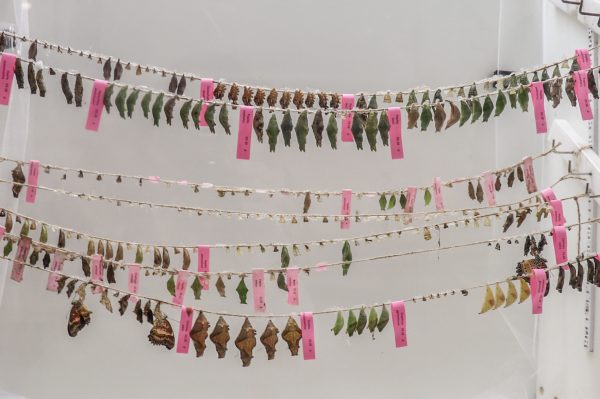 According to Harrison, about 80% of the butterflies in the conservatory come from Costa Rica. The butterflies are mailed in cocoons, and between 100 and 200 butterflies are hatched live every day, giving visitors a chance to witness their first flight and the metamorphosis process. Harrison says that the biggest emergence day and the best day to attend the biosphere is on Mondays, where up to 250 butterflies can be released at once.
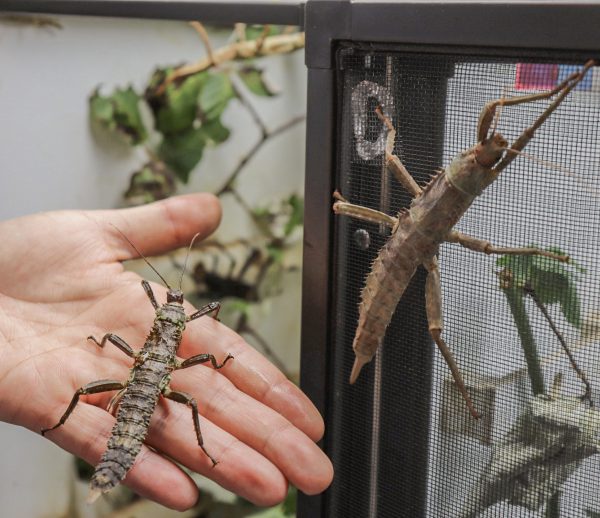
Through their emphasis on biodiversity and bugs of all kinds, from pretty butterflies to stick bugs and decomposers, they also encourage visitors to contribute to their community insect collection through a trading post program. Ashton describes it as an opportunity for kids to go out, collect bugs local to their environment and think like scientists. Harrison also states that they participate in a network of science museums that trade bugs with each other to avoid pulling bugs out of their natural habitat and contributing to pet trades. Pest management for things like aphids in the conservatory is also done completely by hand to avoid the use of pesticides.
“If we’re [going to] have them out of the wild, not in their natural habitat, we want to give them as many opportunities as possible to engage in natural behaviors, to live the long lifespan that they should have … we want to be very responsible stewards of their lives,” says Harrison.
Ashton also encourages a chance for readers to step into the world of the biosphere by attending their upcoming Pollinator Power event on May 16, described as a “Super STEM Saturday” with partner organizations, stations, a pollinator parade and a native butterfly release into the garden.
Crawl Into the World of Bugs
Dr. Jason Cryan, the Sarah B. George Executive Director for the Natural History Museum of Utah, began his entrance to the world of bugs through Earth Day. Originally from Vermont and born in the same year that Earth Day began, Dr. Cryan says he enjoyed discovering and being in nature as a young child. He had a professor in undergraduate that sparked his interest in bugs, Dr. Ross Bell, an entomologist at the University of Vermont. Cryan says he began doing his undergraduate research with Bell and found himself intrigued at the idea of hiking up and down Vermont’s biggest mountains to see ground beetle biodiversity.
“I found myself asking, ‘Oh, my God, can you get paid to, like, do this as a career?'” said Cryan.
His favorite bug started out as beetles, but he says he had an aspiration to study the most wild and weirdest bugs he could find, which led him to becoming a tropical entomologist, working with crazy looking bugs like tree hoppers and plant hoppers, all wild colors and related to the cicada family. He says that they are unbelievable, as if they are little aliens. While he may be an administrator of a museum now, he used to travel the world for science research, his favorite places being Borneo and southern Peru.
Cryan also emphasizes the importance of bugs in a historical context, saying there is no aspect of human culture, biology or history that is not affected by insects. Affecting everything we do from the food we eat to the medicine we make and how we live in our homes. He says that entomology is interesting since it is not just one science but covers a broad number of careers from agricultural to medical. He says that invertebrates are most essential to Utah’s unique ecosystems.
“So any ecosystem, whether it’s a desert, low desert, high desert, mountain, alpine, here in Utah, for rainforest or a temperate forest in the east. Invertebrates really do all kinds of things that are essential to those ecosystems — nutrients cycling, decay and removal of organic materials, pollination absolutely. When you have a healthy biodiversity, including invertebrates, that’s an indicator of a healthy environment,” says Cryan.
Cryan also highlights Utah’s unique variety of ecosystems and the bugs that come with them. “Utah is interesting in that it has some very unique and extreme habitats, and we’ve got a whole suite of animals, including insects, that are adapted to them,” says Cryan.
The Natural History Museum also offers Bug Fest, one of four signature festivals presented by the museum and their summer festival. Cryan says it’s all about understanding something in order to love it and do something for it. Bug Fest brings together invertebrate experts and enthusiasts with lectures, showcases, insect interactions and a bug bar, all with the hope of making those with a fear of bugs more aware of the world of insects. A highlight and fan favorite of the festival according to Cryan is a food experience where guests have a chance to try food made with insects and vote for their favorite.
“I partnered with a professional chef who’s also a scientist, and she puts together four high cuisine recipes using insect ingredients. We invite hundreds of people who come and we give them a taste of everything, and then they vote for which one they like best. It has attracted a huge following. People come year after year and say, ‘I’ll go there for that. This is great,'” says Cryan.
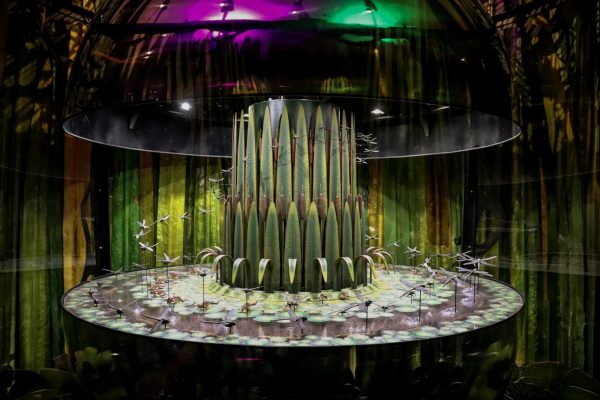
As a treat to hold those over until Bug Fest, the Natural History Museum presents Bug World, an exhibit created by the Museum of New Zealand Te Papa Tongarewa and built by Wētā Workshop, the five-time Academy Award-winning special effects masters behind The Lord of the Rings and Avatar. Cryan says this totally immersive experience tells the story of floral ambush predators, beetles that can create boiling water, mind controlling wasps and a hive that works together. He says it features a more immersive and experiential exhibit than their usual scientifically labeled exhibits, continuing through Bug Fest and into the first week of September.
 Make Mini Friends
For all three experts, it starts with understanding. Ashton says that any negative interaction with a bug can color your impression of all bugs, and Harrison says that fear largely comes from not knowing.
“They’re very different from us, and a lot of times we fear things that we don’t understand. Part of why we’re here is to give people more exposure, desensitization, help them understand what all those legs and mouth parts are doing, and it makes them a little bit less mysterious and less scary,” says Harrison.
Faraji agrees, and says that while the fear is sometimes justified, it doesn’t have to stay that way. “I wish they weren’t afraid … bugs are so fascinating, and even mosquitoes, people just have such a negative reaction towards mosquitoes, but when you really start to look at mosquitoes, you’ll notice how wonderful they actually are,” says Faraji.
Cryan puts it simply: “Bugs aren’t gross. They can be really exciting.” He says that once you begin to understand something, you can begin to appreciate it, and from there, even small actions make a difference. For homeowners, he says the biggest thing is to try to plant native plants when possible and encourage pollinators by planting pollinator-friendly flowers. Something as simple as what is growing in a backyard can make a real difference.
“There are studies from around the world that show that not only are species declining, but biomass is declining, which means we have fewer species and many, many fewer individuals of those species in our lives. Bird biodiversity is declining because of that. It’s not a good story to tell, but it’s a concerning one,” says Cryan.
Harrison agrees, that if all bugs disappeared, “We would see a decline in bird populations, reptiles, amphibians … plants rely on pollinators for pollination … you’ll start to see a decline in plant diversity. Maybe in a year you’ll just see small impacts, but by the next year it’d be catastrophic,” says Harrison.
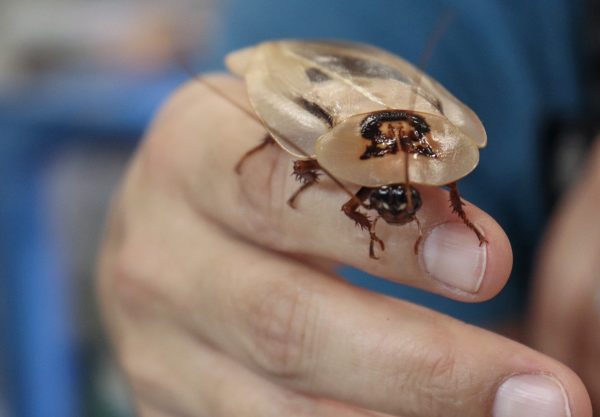
Whether it is a butterfly landing on a shoulder at the biosphere, a mosquito trap being set out at dawn, or a giant cockroach being held for the first time at the Natural History Museum, the bugs are out there doing their thing. As Cryan puts it, “The vast majority of insects are either completely uninterested in what we do as humans, or they’re beneficial to us.”